Skip to content
Search

Latest Stories

HELLO FUTURE: Dan Brouillette on AI, China, and the Race to Power America

HELLO FUTURE: Dan Brouillette on AI, China, and the Race to Power America


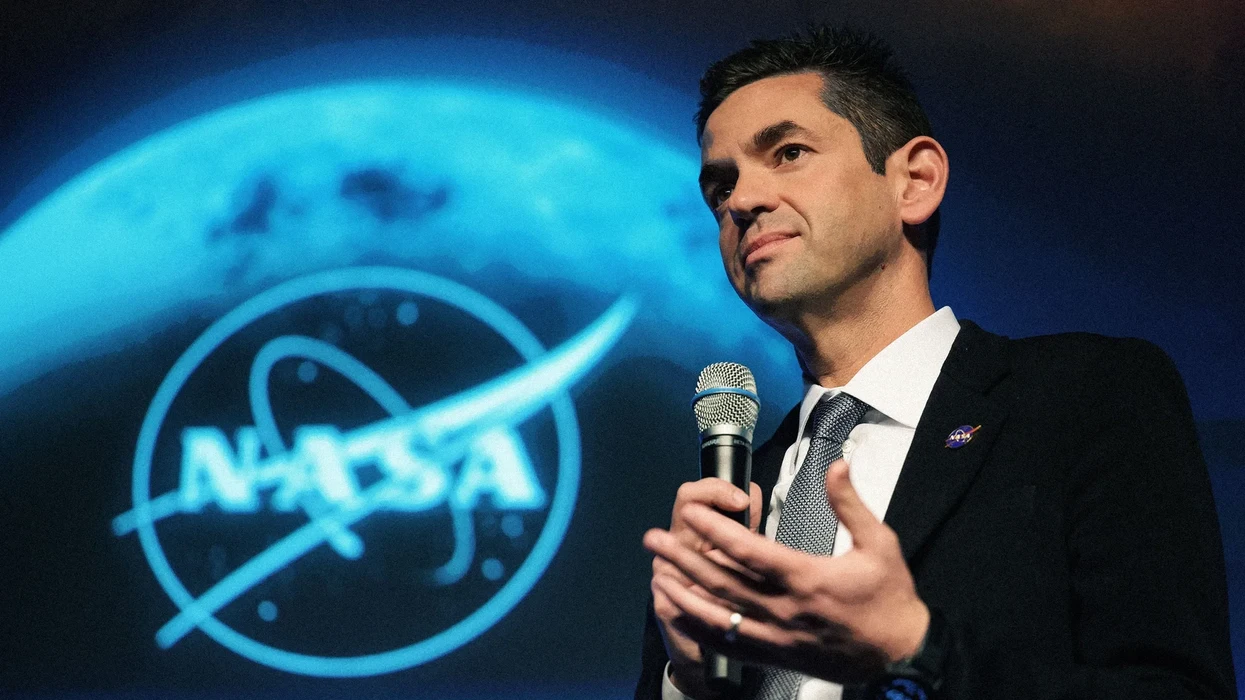
Kevin Cirilli sits down with Dan Brouillette at the National Press Club for a wide-ranging, urgent conversation about the future of American energy and the global race to power artificial intelligence. Brouillette lays out the stakes in plain terms: energy is now national security. Whoever builds power fastest will lead in AI, robotics, data centers, and advanced manufacturing and China is not waiting. He explains why Americas permitting system has become a strategic liability, why data centers are the new industrial foundries, and why the U.S. grid is under growing strain just as demand goes vertical.

Kevin and Brouillette also explore where optimism still lives from LNG as a geopolitical tool that supports allies, to a long-term vision of fusion energy that could one day make todays energy debates obsolete. But the warning is clear: getting to that future requires winning the next 20 years, not the next 200.


This episode is a frontline briefing on the energy battle shaping the future of AI, economic power, and global leadership and why the clock is already ticking.

See omnystudio.com/listener for privacy information.
Speaker 1 (00:07):
Everybody's talking about energy these days. Where we're getting our
energy from. Should America be making more energy? Less energy?
How are we going to power the data centers, the
artificial intelligence. I don't have the answers, folks, I just
asked the questions. Hello Future, It's me Kevin. This is
a dispatch from the Digital Frontier. The planet is Earth.
The year is twenty twenty six. Do you believe it?
I'm getting old twenty twenty six, and my name is
Kevin Sirelli. I'm the founder of MTF dot TV's Meet
the Future. You can check it out on Meet the
Future's website at MTF dot tv. We've got all the
Hello Future podcasts on there, and of course we have
a link to the iHeartMedia app where you can download.
You should download, by the way, download the iHeartMedia app
please and get all the latest Hello Future episodes. And
my guest today is former Energy Secretary Dan Briette. I
interviewed them the other week at the National Press Club, Washington, DC,
the big iconic National Press Club, about a preview of
energy policy. Take a listen. First of all, thank you
for being here. There's been a lot of conversation, particularly
in the future space, about artificial intelligence, quantum computing. You
and I were just talking even about hypersonic development, and
how all of these technologies are really dramatically changing not
just our country and our country's infrastructure, but also the
world and the opportunities for the global economy. Some up
where we are. What are some of the key three
issues that you're going to be watching for in the
short term that you think this room, in particular at
the National Press Club should be aware of.

Speaker 2 (01:43):
Wow, that's a big question. Mail.

Speaker 3 (01:47):
I was trying to think back to that interview during
our COVID days, and I remember the questions you were
asking me. Then they were pointed, but they were also big,
and I remember quaking, thinking I don't have an answer,
so these questions. What am I to say to this guy?
And I feel that way right now. So tell you, you know,
just to sum up where I think we are in
terms of as a nation, as a country. And I
know many of you, being either members of the press,
are very attuned to what is being talked about in
the press. Understand clearly that we're in a race. We're
in a race against China, We're in a race against
other energy producers, for things like AI data centers. And
when I think about, you know, data centers and what
they are, you know, I'm not Elon Musk, I'm not
Sam Altman. So I know what a data center is.
I know generally what we use it for. I know
how much power it takes to run one. I don't
know exactly what's inside the boxes. So I don't want
to sound like a technological expert here of not. But
what I think about when I think about those data
centers is that for me looking at history, they look
like the founderies that we had back in the early
part of the century. It's the foundation of our economy.

Speaker 2 (02:53):
That's what it's going to be.

Speaker 3 (02:55):
So if we think back in history about where energy
fits in US history, think back to every reconsequential moment
in your lifetime, or perhaps just a few decades before
you were born. World War II, for instance, we didn't
produce more soldiers or more tanks, more airplanes than the
other access countries. We did numerically, but that wasn't what
won the war. We produced more energy. It was the
energy that reproduced here in the country that allowed our
factories to stay open to produce those aeroplanes. It was
the energy that we produced here that allowed us to
lend efforts to our allies in Europe and other places.
I think roughly I was talking to Dan Jergan about
this briefly. I just read his book again, The New Map.
I think we produced roughly six million barrels a day
of oil back in World War Two, but roughly six
out of every seven barrels that were used in the
war were produced here in the United States, which is
amazing what you think of it. So it's understanding that
as you think about the AI conversation, it's understanding where
it fits in that foundation of our economy. And that's
why this race or this sprint to develop this technology
and to ensure that it states here in the United
States is so important. And that's why it's also important
for us to think about energy infrastructure and how do
we develop that quickly to allow this to become what
we all think it will become. Oil dominated World War Two,
it was the foundation. In the future it will be electricity.

Speaker 1 (04:26):
So I want to go right to electricity. So thank
you for bringing that up. Do we have an abundance problem?
Do we have a grid problem? What's the diagnose in
the room? Specifically the problem. And look, I think it
is very fair for Americans. I grew up outside of Philadelphia,
so want to make sure that, yes, their community and
where they come from is not left behind. What I
believe is the start of the Second Industrial Revolution, which
we're at the starting line of. At the same time,
you don't want to have rise and cost in your
electric bill, which is a totally fair question. I also
believe that artificial intelligence could actually solve, potentially create innovative
solutions to keep electricity costs down. Assess how we are
able to walk and chew gum at the same time,
which this town exactly.

Speaker 2 (05:12):
I'm still learning how to do it now. Look, I
think you're absolutely right. The technology is.

Speaker 3 (05:18):
Going to be power intense in the near term. I mean,
the curve always looks like this. It goes, it spikes,
and then it starts to come down. We see that
with everything. You know, cars used a lot of gasoline,
a lot of oil when they were first you know,
manufactured and first produced. That's come down. The same thing
happens with computers. The same thing is going.

Speaker 2 (05:36):
To happen with AI.

Speaker 3 (05:37):
We have to build the infrastructure that's necessary to get
it going. However, once we begin to apply even more
so to our daily lives, we're going to see it
being applied to data centers and energy intense parts of
our economy like data centers, and we're going to see
efficiencies developed as a result of it. So the technology
will help us there. But the challenge here in America
today is both generation and infrastructure.

Speaker 2 (06:00):
It's both.

Speaker 3 (06:01):
We have made some decisions over the course of the
last three perhaps four decades that were focused, perhaps appropriately
in my personal view, maybe a little too exclusively on
things like climate change in environmental science. We viewed energy
policy almost exclusively in certain points of our history through
that lens, and I don't think that's what energy policy
should be. That's important, it's a component of it. But
my point in that is that because we did that,
we retired what is known as base load power. Firm
power data centers need to power twenty four to seven,
three hundred and sixty five days a year, and we've
replaced it with renewable power or carbon free power. Just
to give you a quick example nuclear power today, the
capacity factor on a nuclear plant somewhere north of eighty
five percent ninety percent, eighty percent, right, which means it
produces electricity eighty five percent of the time. If you
replace that with a windmill that produces has a capacity
factor of thirty five percent, you're going to have a gap.
There's no way to avoid that. You're going to have
a gap. You're either going to replace it with natural
gas backup or you're going to replace it with battery
technologies to cover that time frame. That's a decision we've made.
So today, as a result of those policy decisions, we
are short on electrons. If you read the reports coming
out of places like what is called NRK INNERC or FERK,
which is the Federal Energy Regulatory Commission, they will tell
you that by twenty thirty today we are short about
twenty five to thirty gigawatts of electricity. That's today because
we retired a lot of this base load generation too fast,
too quickly in search of or in pursuit of a
climate goal. That's a problem. We have to turn that around.
I think the administration is doing some of that today.
To put that in context, thirty gigawatts. New York City
on an average day uses about six gigawatts, So we're
talking about building fire five New York size grids in
five years. Does anyone in this room think that's possible
given our current permitting situation, I dare say no, we're not.
So we got a bit of a crisis here on
that side. The other part in America, I'll stop so
we can get to the rest of the conversation is
the infrastructure that's needed to move the electrons to where
they need to be. Again, a permitting issue. It takes
on average seven to ten years to permit a transmission
line in the country today.

Speaker 2 (08:30):
That's a challenge. We have to fix that.

Speaker 1 (08:32):
So while all of that's happening here in our country,
there's a war going on and conflict going on, and
Russia is a terrible conflict against Ukraine, and you've got
hijin pain staring down Taiwan and they're carefully carefully watching
how the US response. Now. I also believe that America's
greatest export has always been its innovation, always, and if
we're choking ourselves with regulatory hurdles and choking our innovation
and stifling that, there's an economic cost, but there's also
a national security one. What lessons do you think the
Russians and the Chinese are observations that they're making and
calculations that they're making about us as these geopolitical events
are underwrite.

Speaker 3 (09:13):
They're watching us very clearly kill our energy industry. It
is the foundation of the innovation that you just talked about.
I agree with you. America is the most innovative country
in the world. We're only limited by our imagination.

Speaker 2 (09:24):
That's it.

Speaker 3 (09:25):
I mean, this country is amazing. There is nothing that
stops us from doing what we need to do. But
in order to get any of that done, we have
to have a foundation. And that's what we've done over
the last two three four decades, is that we've slowly
strangled this energy industry. And that is what concerns me.
So when I look at China, and you can look
at the Belton Road efforts that they've undertaken over the
course of the last few years, what are they doing.
They're buying critical minerals, They're buying rights to critical minerals
all around the world. Why, because they're building out their
energy sources. They're building out their energy capacity. We see
that in that area with critical minerals, and an hotel
has been a part of that at the US Department
of Energy. But you know, we see it in every
other aspect of their energy space. It takes us, on
average twenty years to build one nuclear facility, one reactor.
Here in the United States, they build one every five years,
a brand new in every five years. So they've looked
at us and they've said they're falling behind. They're going
to continue to fall behind. We're going to pass them up.

Speaker 2 (10:24):
You know.

Speaker 1 (10:24):
When I was at the Atlantic Council on Fellowship, I
was a media fellow in the China Hub and one
of the things that I one of my key takeaways
from that experience was just how authoritarian regimes weaponize our
freedoms against ourselves. They do it in the press, they
do it with this information. They do it in our schools,
they do it on social media platforms. They also do
it in the legal court sector. And so right now
in Louisiana, your neck of the woods, there's we should
do it down there. We should do a conversation in
New Orleans with you can we do it on Bourbon
Street exactly as long as I get the big you know,
you know, we should have had them at our Breck
notes for next time. We'll have some vindays we'll do
with New Orleans but they're they're actually suing energy companies.
My understanding because of World War two, and so here
we are they're going back, you know, energy, It's a
fact helped us defeat the Nazis, right, the energy sector
here in the United States. And now I'm thinking here
we are building infrastructure for the future, data centers for
the future, making sure that America has is still leading
on artificial intelligence, which our country invented literally literally and
so but fifty years from now into the future, if
you're in the private sector, are you watching what's happening
in Louisiana worried that you're just gonna get whacked with
a lawsuit or your grandkids are going to get whacked
with the lawsuit.

Speaker 3 (11:50):
Yeah, you are worried about it. Just for the record,
that's not None of those guys or my cousins. My
cousins are not suing, although I got to check on
them every now and then. It can be crazy like
that sue their own employer. It's a very legitious environment,
is my point. Down in Louisiana. No, you're absolutely right.
I mean, look the companies that were involved, Standard Oil, Chevron,
you know, successfor companies all of those countries did what
the country asked them to do at the time, and they,
you know, they were unified in that purpose. You know,
they didn't ask why, they didn't ask should we They didn't,
they didn't ask any of those questions. The government said
the country set as a nation, we need you to
produce this in order to win a world war, and
they did it. So to come to them fifty years
later and say, oh, you know what, you didn't really
clean up this little spot like we wanted it cleaned up.
You thought it was clean then. We may have even
said it was clean then, but we don't think it's
clean now. Applying a different standard, you know, to that,
to that effort and to bring them into court, I
think since a very dangerous signal to future energy producers,
and we have to address that as a nation.

Speaker 1 (12:52):
All right, So I'm gonna ask you one more question,
which I always close out my interviews with with these conversations.
The last conversation we had, which was some and I
know you know very well General Gagnon from the United
States Space Force, and everyone's talking about America is turning
two hundred and fifty years old. I'm like, in the
Grand Scheme of civilization. That's pretty young. Yeah, you know,
I would say we're in our preteen years. So things
are getting a little rambunctious, to put it mildly. But
I'm not going to talk about politics because that's.

Speaker 2 (13:19):
My old life.

Speaker 1 (13:20):
But where is So I asked General Gagnon, where is
America two hundred and fifty years from now in outer space?
And of course the Energy Secretary does sit on the
Vice President's Space Council, so I'm not going to ask
you if there's aliens that I.

Speaker 2 (13:34):
Want to know. I have been the area fifty one.
I mean, now, I got it.

Speaker 1 (13:37):
What was that way? This is my second to last question.

Speaker 2 (13:40):
What was that like? In one word?

Speaker 1 (13:42):
What was it like?

Speaker 2 (13:43):
Fascinating?

Speaker 1 (13:44):
All right, all right, we'll talk to him off the record. Yeah,
but he said, I said, where's America when she turns
five hundred years old? And he said beyond the moon?
Which I thought was really cool. So where is America's
energy two hundred and fifty years from now?

Speaker 3 (14:03):
That's a really good question. You know, we talked about
energy just a couple of minutes ago. We defined it
really in terms of what I might describe is as scarcity.

Speaker 2 (14:13):
You know, we either have it or we don't. We
produce it or we don't.

Speaker 3 (14:16):
And I think when I think about the country two
hundred and fifty years from now, those questions will be irrelevant.
They will be overcome by the technologies that we're going
to develop. You mentioned the innovation capacity of this country.
I believe in that. So when I think about what's
going to happen in the future, I get very excited
about things like fusion energy nuclear fusion different than fission,
literally bringing the Sun to the Earth. If we can
do that, and I believe that we can, and all
of the conversations we have today about renewable power, oil
versus natural gas, natural gas versus nuclear irrelevant, all irrelevant
if we can bring the Sun to the Earth, and
I think we will

More For You