Subscribe to my YouTube channel here. THANK YOU.
🚀🕊 TRUMP–PUTIN SUMMIT: THE FUTURE OF WAR, PEACE… AND SPACE — In Alaska, U.S. President Donald Trump and Russian President Vladimir Putin are meeting to discuss ending the war in Ukraine. But this isn’t just about borders — the outcome could shape the world’s tech race, resource map, and global power for decades.
—> THE STAGGERING DEATH TOLL: The war has already cost over 1 million Russian casualties — more than five times the total Soviet/Russian dead from every conflict since WWII combined. Ukraine’s losses are also devastating, with up to 100,000 killed. These numbers aren’t just statistics — they represent a generational shift in demographics, economies, and national stability. What happens in Alaska could determine whether the killing stops or accelerates.
—> RARE EARTH MINERALS & THE TECH RACE: Ukraine isn’t just farmland — it’s home to vital rare earth elements used in AI chips, quantum computers, EV batteries, and military satellites. Control over these resources could tilt the balance of power in the AI and space industries for the next century. If Russia locks them down, the West could lose ground in everything from space exploration to quantum encryption.
—> WHY THIS MATTERS FOR THE FUTURE: A peace deal could open the door to joint missions in space, shared climate tech, and even AI-driven global security systems. A breakdown could spark a new tech Cold War — one fought not just on Earth, but in orbit and beyond. The Alaska summit isn’t just about ending a war — it’s about deciding which vision of the future wins: cooperation on the final frontier or a fractured planet racing toward conflict in space.
Sources: BBC, The Guardian
hello, future. it’s me, kev.
…and this is a dispatch from the digital frontier. It’s time to meet the future NOW — with the latest on markets, tech, and freedom. The day is 226. The year is 2025. The planet is Earth.
The planet has complete 61.92 percent of its orbit around the Sun. My name is Kevin Cirilli —> LinkedIn. Spotify. Sign-up to receive the future in your inbox here.
Back to the future...
SPACE
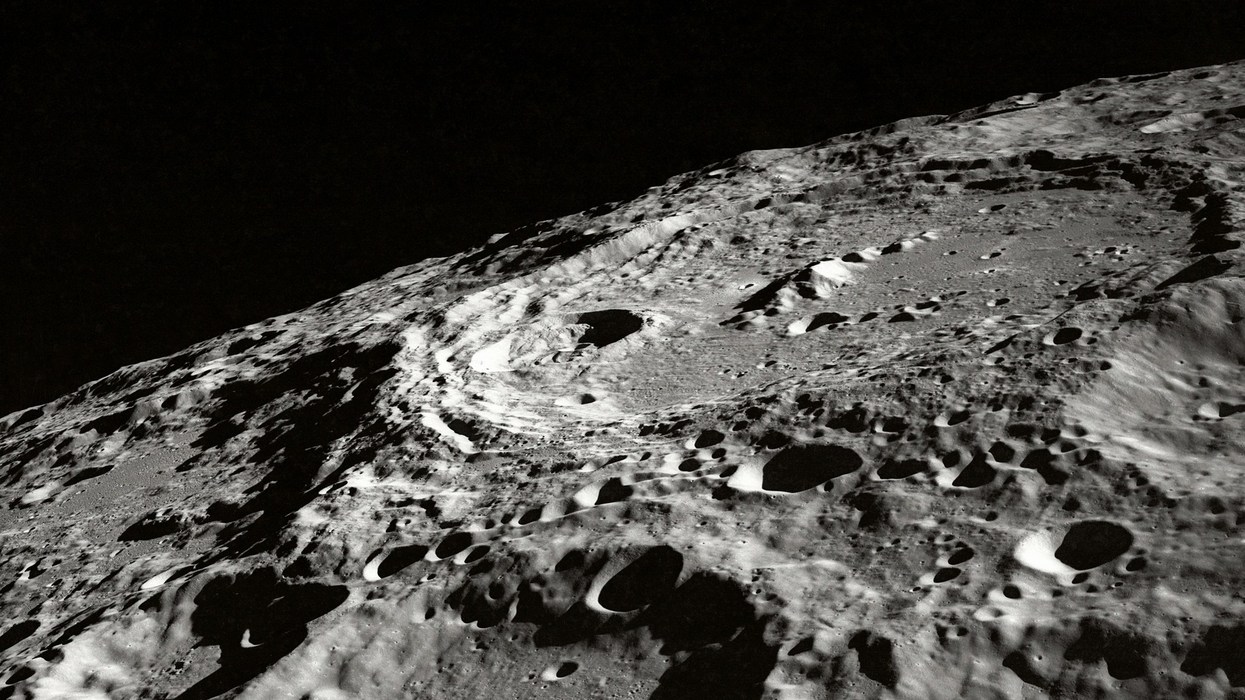
🌕⚖️ NUCLEAR POWER ON THE MOON: WHO MAKES THE RULES? — The new space race isn’t about planting flags — it’s about building the power to stay. China wants a lunar nuclear plant by 2035. NASA says it’ll beat them to it by 2030.
—> THE LAW SAYS: Under the 1967 Outer Space Treaty, no one can own the Moon — but you can build infrastructure there. Article IX says countries must act with “due regard” for others, meaning if you place a reactor, others have to work around it. That’s influence without ownership.
—> WHY THIS MATTERS: The first country to build a lunar reactor could set the norms — the unspoken rules — for how future Moon bases operate, who gets access, and where others can safely build.
—> RESOURCE POWER: This is especially important near the Moon’s south pole, where ice could be turned into water or rocket fuel. Controlling power there means controlling access to the most valuable resources in space.
—> THE FINE PRINT: The UN’s 1992 principles allow nuclear power in space if it’s safe, transparent, and peaceful. But “safe” and “transparent” will depend on how much countries are willing to share — and trust each other.
Source: Space.com
QUANTUM // ARTIFICIAL INTELLIGENCE
💰🤖 OPENAI MAY PUT ADS IN CHATGPT — BUT SLOWLY — ChatGPT boss Nick Turley says ads aren’t off the table, though they’d need to be “thoughtful and tasteful.” OpenAI’s making $12.7B this year (triple last year’s revenue) from subscriptions but still won’t be cash-flow positive until 2029.
—> WHY THIS MATTERS: Ads could help OpenAI close the gap — but CEO Sam Altman says it’s a “last resort.” Rival xAI already plans ads in Grok’s answers.
—> NEXT MOVE: OpenAI’s also testing “Commerce in ChatGPT,” where it takes a cut from product purchases through the chatbot — while promising recommendations stay unbiased.
Source: The Verge
mtf is very much accepting ads :)…. call me!
FUTURE OF WORK
💡🚀 BILL GATES’ BLUEPRINT FOR NAILING “WHY SHOULD WE HIRE YOU?” — ADVICE FOR THE NEXT GEN — In a mock interview four years ago with NBA star Stephen Curry, Bill Gates gave a masterclass in how to answer one of the toughest job interview questions without sounding fake, over-rehearsed, or self-centered. His approach? Show, don’t tell.
With all the doom and gloom in the job market, I figured this might be worth dusting off to the next gen.
—> PROOF BEATS PROMISES: Instead of rattling off buzzwords like “hard worker” or “problem solver,” Gates pointed to actual work he’d done early in his career — “Look at the code I’ve written. I went beyond what was taught in my courses. I’ve improved over time.” This lines up with hiring data: 68% of managers prefer concrete examples over vague claims (LinkedIn Talent Insights, 2024).
—> TURN A FLAW INTO FUEL: Gates admitted, “I can be overly critical of my colleagues’ work, but my goal is to push for ambitious outcomes.” He reframed a weakness into a driver of excellence. Workplace psychologists call this constructive vulnerability — showing self-awareness without tanking your credibility. A 2023 Harvard Business Review study found this approach makes candidates seem more trustworthy and coachable.
—> MAKE IT ABOUT THEIR FUTURE, NOT JUST YOURS: Gates ended by aligning himself with the mission — “I like ambitious goals. I like thinking about how to anticipate the future.” This shift from me to we is huge: 72% of recruiters now rank culture/mission fit above years of experience (Glassdoor for Employers, 2025).
🔑 YOUR MOVE: Next time you get this question—
Lead with proof (a real achievement).
Own a real challenge (and show how you manage it).
Tie it to the company’s mission (think long-term impact).
This isn’t about selling yourself — it’s about showing you’re already ready to help shape the future.
Source: Indian Defence Review | Watch the Interview
THINK FAST
⚡🏭 DATA CENTERS THAT MAKE THEIR OWN POWER WILL BE THE BEST NEIGHBORS — The group that watches over the biggest U.S. power grid says big data centers should have to make their own electricity.
—> WHY THIS MATTERS: If a data center makes its own power, it won’t drain energy from the grid or make your electric bill go up. That means towns can get new jobs and better internet without risking blackouts.
—> THE PROBLEM: The PJM grid, which runs across 13 states from Virginia to Illinois, is already running out of extra power. The huge energy needs of AI are making it worse.
—> THE BIG WIN: In the future, the best data centers will be the ones that power themselves. Those will be the ones cities want most — because they bring jobs and keep the lights on.
Source: Bloomberg
ONE MORE THING // ROBOTS
With gratitude,
Kev
ABOUT mtf.tv’s meet the future: mtf.tv’s meet the future is a cutting-edge platform focused on addressing key challenges at the intersection of national security, technology, and business. With a mission to embrace freedom to meet the future’s challenges and opportunities, mtf.tv offers forward-thinking media offerings and forums.
 mtf.tv’s meet the future founder Kevin Cirilli.