Skip to content
Search

Latest Stories

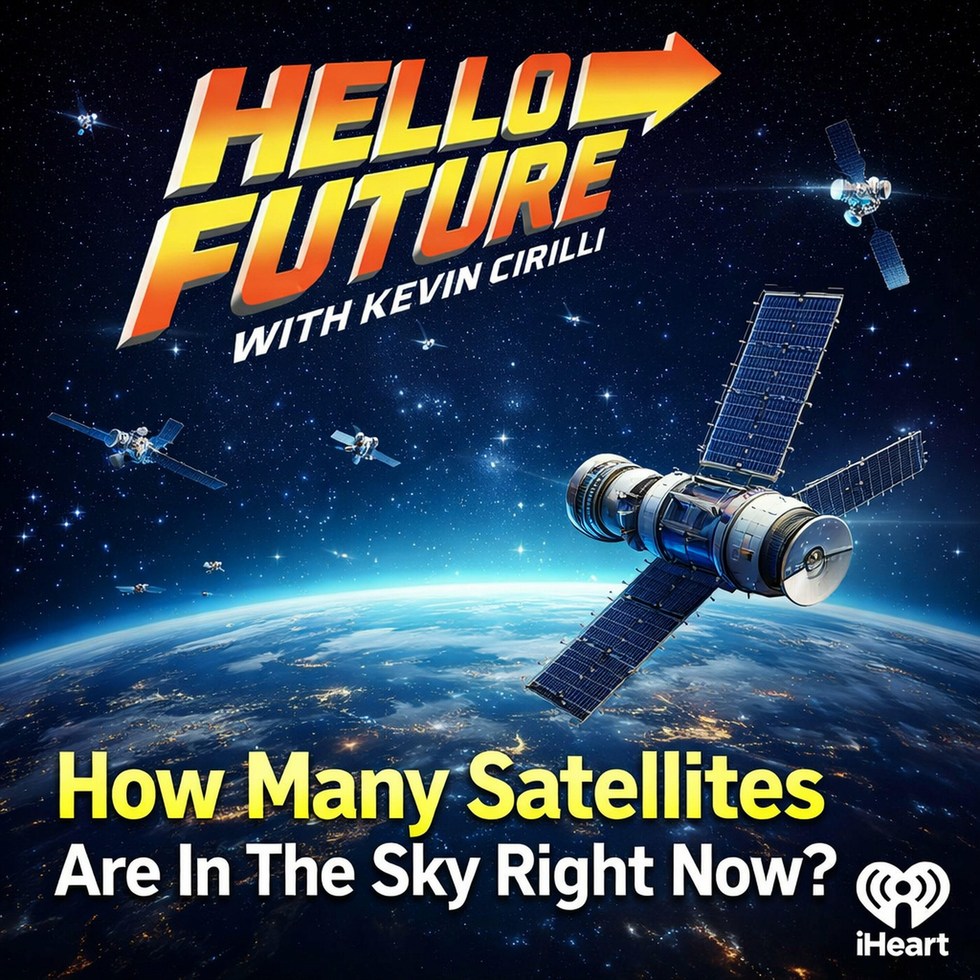
HELLO FUTURE: How Many Satellites Are In The Sky Right Now?

HELLO FUTURE: How Many Satellites Are In The Sky Right Now?


In this episode of Hello Future, Peter Krauss from Terran Orbital gives us the answer and explains why the number is growing so fast. We talk about the new star trackers Terran Orbital just unveiled — smart little cameras that help satellites know exactly where they are pointing in space. These new tools will be used on many different missions, from regular Earth satellites to deep space projects.

Peter also updates us on the Space Development Agency’s Tranche 1 satellites that are now in orbit and being tested. He shows how building hundreds of smaller satellites — instead of a few big ones — is making space networks tougher and more reliable for both national security and future exploration. We also look at how the same smart ideas are helping with asteroid missions and keeping Earth safe.


Meet The Future: https://mtf.tv/

See omnystudio.com/listener for privacy information.

Speaker 1 (00:07):
I'm still excited from what happened with Artemis and watching
the images of the splashdown and the Americans and the
Canadian astronauts coming back down to planet Earth, reaching further
on a mission into space than anyone has ever gone before.
Hello Future, It's me keV. This is a dispatch from
the Digital Frontier. The planet is Earth. The year is
twenty twenty six. My name is Kevin Sirilli. You can
listen to all of the latest episodes of Hello Future
on your iHeartMedia app, and be sure to check us
out at MTF dot TV. My guest today is the
CEO of tarn Orbital. His name is Peter Krause, and
he's going to talk to us all about the work
that satellites are doing in order to help humans not
just go further into space, but also live better lives
here on planet Earth. All right, Peter, thank you so
much for joining us. I know you've got a busy
couple of weeks. You guys have just been announcing one
thing after the other, and I want to hear all
about that. But before we get to that specific element,
a lot of people don't even know what satellites do.
They know that they've heard of Sputnik, or they've they've
heard of they know that they get their weather sort
of from it. But tell us a little bit about
what your company does for people like me who are
really fascinated by it but don't know the ends and
the ELTs.

Speaker 2 (01:29):
Yeah, well that's a great lead in, and I appreciate it.
Thanks for having me. By the way, I'm really excited
to be on the show with you. So yeah, I'll
put it in the simplest, maybe layman's terms as I can. Right,
there's two very specific classifications of satellite. There's the really
really really really big what we call exquisite satellites that
are responsible, like you mentioned for the GPS in your car. Right,
people take that for granted, but that comes from satellite technology. Right.
You've got satellites that are in orbit around the Earth, mapping, plotting, charting.
They know exactly where you are at any given moment.
That's how your GPS works and your navigation works in
your car.

Speaker 1 (02:05):
So to mention, your banking, your weather, your music, the
ability to hail an uber or a lift, all of
it is so interconnected, your Internet, everything besides.

Speaker 2 (02:16):
All space based assets exactly, right, So the second class,
which is the area in which we participate is in
the small satellite space. That's really being the big satellite
boom of the last three to five years. The last
couple of years in particular, has really gained quite a
bit of momentum. Those satellites are used for a variety
of different reasons. A lot of the which though, are
what we call satcom, which your satellite communications. So you
mentioned in your introduction Artemists, right that very very exciting mission.
We're all still dealing with the goosebunks, goosebump watching for Friday.
You know, a satellite that we had Turan Orbital built
called Capstone, actually was what we would call kind of
a pathfinder or a precursor of the Artmis missions flew
out in deep space, actually did the trajectory very similarly
to Artemis just did around the Moon, captured data, images
and all kinds of critical information that actually informed NASA
before we flew Artemis.

Speaker 1 (03:07):
The reason I love that anecdote and I want to
I want there's so much I want to unpack with
what you just said. But I remember when I was
a kid and I was growing up outside of Philly,
and I would learn about the explorers, and I would
hear about how they would send birds from their ship
to see if there was land. And as much as
we think that technology is reinventing and recreating nature, it's
actually just mimicking nature. And the fact that America and
an American based company was able to send I'm going
to call it the satellite bird out around the Moon
to test and get the information to make it safer
for the Artemis astronauts to get that data. I mean,
that is so cool. And that playbook, folks, if you're listening,
is going to be applied and is already being applied
to Mars, to asteroids, to Jupiter's moods. I mean, if
you think of all of these satellites that have been
sent further and further into our Solar system, and even
outside of our Solar system, when you think of the
two that are the voyagers that are out there even further,
they're trying to get data so that we know where
to go and we have the information, it's really fascinating.

Speaker 2 (04:18):
Peter, No, that's that's a great I love that analogy.
Actually I might to use that. I much steal that
from you. Go for it.

Speaker 1 (04:23):
Your free advice Forday.

Speaker 2 (04:25):
Yeah, that's not exactly right. We're out there exploring and
forming and making the entire mission set safer. But the
other piece of it, and you touched on it also
in your opening, is it's the communication. It's the deep
space communication. One of the things Artemis proved and Capstone
helped is that deep space communication with much less latency.
If you look back to the Apollo missions going back
into the sixties and seventies, the amount of time it
took transmit right in the movies and on TV, it
seems instantaneous, and real life it was not right. Sometimes
it took minutes for information to be relaid back and
forth between the spacecraft and Houston. That is now that
latency is basically almost zero, right, And that's because of
deep space assets like the satellites that we and other
companies manufacturer that are a daisy chain if you will,
right that link all that communications out into deep space.
And as we're exploring to the Moon, which is our
gateway to Mars, that deep space communication is critical and
that's made possible by satellites.

Speaker 1 (05:22):
I see. I think it's so interesting. They're almost as
if they're the connect the dots or the street lamps.
I mean, there's so many analogies you could use for
them on the highway that we're building of this information
system that has to go first from planet Earth to
the Moon. I'm a big supporter of data centers on
the Moon or orbiting the Moon, but in order to
get that into a reality, you have to pave the roads,
and satellites are really the pavers in many way of
creating the information highway. They got it wrong in the
nineteen nineties when they called the Internet the information highway,
because it's really the work of the cess lunar supply
chain that is going to be the true gateway in
the information highway to to protect all of our digital assets.
I mean, when you think about it, folks, if we
were reliant on one big satellite or a couple of
big satellites, and heaven forbid, there'd be a solar flare
that causes damage to one of them, doesn't even take
it out. That would negatively impact all of our ability
to have the freedoms that we love in our modern
way of life. What tarn Orbital does, and Peter Cross's
CEO of it does is helps to diversify the reliance
on one large, huge satellite, because there's a bunch of
mini satellites and that's what's so fascinating. So to put
that in perspective, it's like instead of having one giant plant,
you're having a bunch of different smartphones up there zipping around.
How big are your satellites? Just put it in context
for the size of them.

Speaker 2 (06:52):
Well, i'll give you so the really big satellites that
a referenced earlier are literally the size of a school bus, right,
to give you some contact, Yeah, the satellites that we make,
some are as small as a toaster of them, some
are as big as a refrigerator. Well, and the real
workhourse of the fleet now, as we talk about all
the separated constellations, are more the refrigerator sized satellites than
anything else. And you're spot on right. You build a
school bus size, multi billion dollar satellite that somehow gets broken, busted,
hit by space debris, or something happens in a wartime environment,
it's a lot harder to replace and replenish that multi
billion dollar school bus size satellite when you have redundancy
already built in, with many, many dozens and dozens, sometimes
even hundreds. I'll if you can consider starlink for example,
of satellites are already in orbit, you lose one or
two or three or five your constellation and your network
is still operational.

Speaker 1 (07:49):
You know how many satellites are there in the sky
right now?

Speaker 2 (07:53):
Thousands. I can't share the exact numbers for national security reasons.
There's stuff available in the public domain, obviously confidential stuff
that's up in space two, but thousands of space borne assets.

Speaker 1 (08:04):
And then if you look at it from the trend,
I would imagine that there's just going to it's going
to keep getting more and more satellites. So and then
is there any what can you share with us in
terms of like in the next ten years. I'm just
trying to illustrate just how much this industry is booming.

Speaker 2 (08:17):
Yeah, it's going to be exponential. I mean, we're in
the middle of looking at constellations that are six hundred,
seven hundred one thousand satellites in their own right, and
there are multiples of those that are being contemplated. As
the government is considering sort of their next generation of architecture,
space based architecture, they're contemplating hundreds of additional satellites. So
in the very congested already LEO and GEO orbits that
we predominantly dominate LEO in particular, they're about to get
a whole lot more crowded over the next two to
five years.

Speaker 1 (08:52):
Okay, And the question that I always get that again,
I try to mythbust mythbust for us. Why shouldn't people
be concerned about having thousands and thousands of satellites zipping
around the Earth, you know, you know all the clickbait
stuff that's out there about you know, oh, it's gonna
you know, wreak havoc or space debris and all of
this stuff. And yeah, I think that's a reasonable question
to ask. But I don't think we're anywhere near that
being a problem.

Speaker 2 (09:19):
No, And I think the general population would be really
surprised to learn how strict the rules are around launching
a space based asset, disposing of a space based asset, deorbiting.
There are very strict rules against space junk. When you
have a non functioning satellite and orbit, how do you
get rid of it? How do you dispose it so
that we don't create this congestion unnecessarily that could potentially
cause any harm. The science and the technology around these
satellites is so unbelievably good. I'm in all all the
time of the engineers that I'm surrounded by and have
the privilege to work with the technology. Just make sure
these things don't run into each other. They just don't,
and it's a miraculous thing. But again, there are strict,
strict rules as to how that is handled and managed.
There's really no risk to the general public.

Speaker 1 (10:06):
And there's also technology of like I call them space
trash trucks where you can actually and the technology is
getting there where you can clean up space debris even
and as there's more and more, you know that's going
to be even more of another industry that continues to advance.
The last question I have for you is you mentioned
engineers who are designing these, but these are also manufacturing jobs.
I would imagine that you're supporting a lot of jobs.
And when people think of building satellites, even though they're
the size of a toaster oven or the size of
a refrigerator, these are still American manufacturing jobs, are they not?

Speaker 2 (10:38):
Very much so? And that's something we're incredibly proud of
and candidly at TARN Orbital more so than even others
in our industry. All of our workforce is here domestically.
Vast majority of all our components, hardware and everything are
sourced very responsibly here in the US. We're also vertically integrated,
and what that means is eighty plus percent of what
we use in our space based vehicles we actually manufacture
sure in house in Irvine, California. I've made hundreds of engineers,
hundreds of manufacturing people, and that's only growing and expanding.

Speaker 1 (11:08):
It's incredible. All right, Peter Krause, CEO of Tarn Orbital,
I really appreciate you coming down to answer all of
these questions. You're at Space and Posium right now out
in Colorado Springs, a really busy couple of weeks and
even bigger coming up for you. Again. They were instrumental
in that Artemis to successful mission, and we're going to
have you back on the program. So we'll have you
back on and talk more about the Moon and why
folks should care about the Moon. It's more than just
an opportunity to reassert the United States's dominance in the
space industry. I'm Kevin's really thanks for showing up to
meet the future and have a great tomorrow today

More For You