Skip to content
Search

Latest Stories

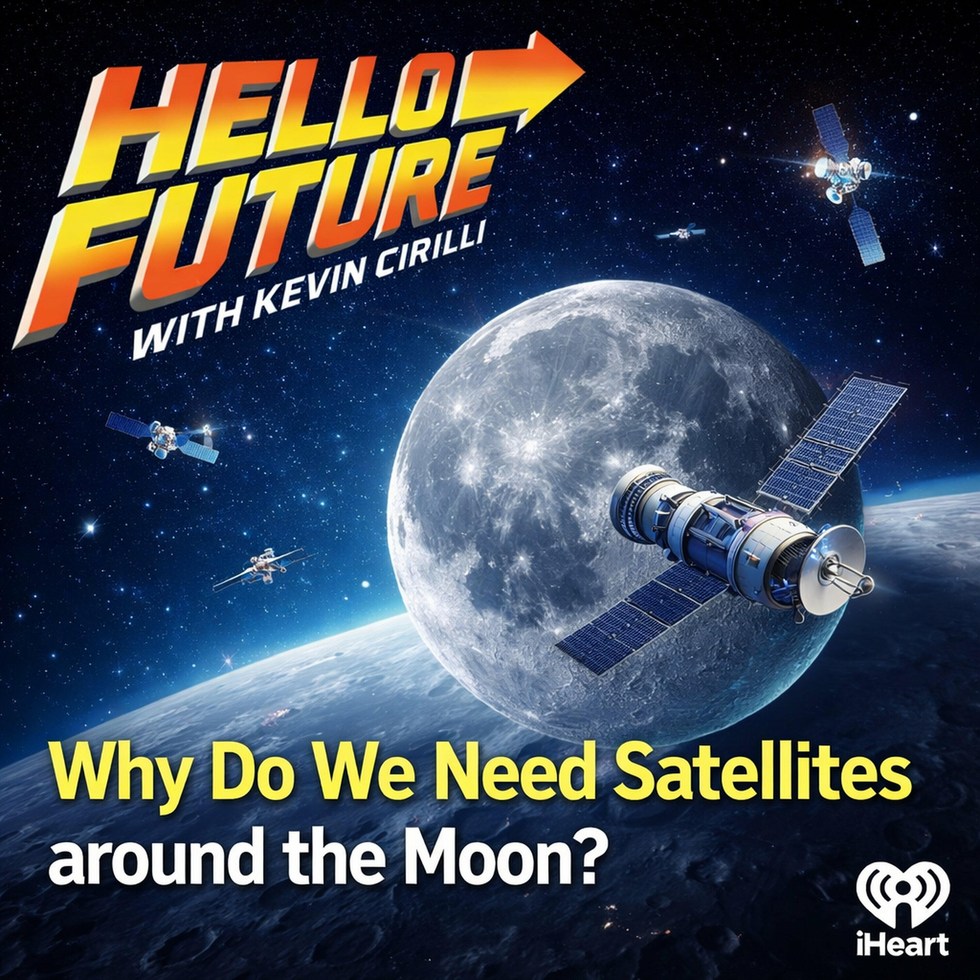
HELLO FUTURE: Why Do We Need Satellites around the Moon?

HELLO FUTURE: Why Do We Need Satellites around the Moon?


In this episode of Hello Future, Peter Krauss — the President and CEO of Terran Orbital — answers that question and shows how small satellites are getting us ready for the future. We start with NASA’s CAPSTONE mission. This tiny satellite is acting like a scout, testing a special orbit around the Moon so astronauts can safely travel there on the Artemis missions.

Then Peter explains the big change happening closer to Earth. Instead of one giant satellite, the U.S. military is building huge groups of smaller ones. Terran Orbital just delivered all 42 satellite buses for the first batch, called Tranche 1. These many small satellites work together to make communication faster, stronger, and much harder to break. Peter also talks about what’s coming next with Tranche 3 and how these satellites will help keep our country safe.


Meet The Future: https://mtf.tv/

See omnystudio.com/listener for privacy information.

Speaker 1 (00:08):
I don't know if you're like me, but I just
cannot get enough of the Moon coverage and I just
start going down these YouTube rabbit holes where I envision
outposts on the Moon and outposts on Mars and space
stations that are rest stops along the way, whether it's
a space hotel, a space restaurant, or a space hospital
where there's science labs happening. I mean, Artemis two has
really inspired the next generation for the space industry. Hello Future,
it's me keV. This is a dispatch from the Digital Frontier.
The planet is Earth, the year is twenty twenty six.
My name is Kevin Sirilli, and today I am so
excited to welcome back to the program the CEO of
Tarren Orbital, Peter Krause. He's been on the show a
couple of times, and today I just want to dive
headfirst into the Moon because I said this on the
last episode. Go check it out if you haven't listened
to it already. Before the astronauts on Artemis who went
into the furthest reaching mission into man made mission into space,
scientists sense satellites to map and pave the way for
them to get data to get key data to make
it safer for humans to go further into space. The
analogy that I like to use is when the explorers
would send a dove looking for land, and if the
dove came back and whatnot, you know, they knew that
there wasn't land, but if they didn't come back, they
knew that there was land. It's sort of similar in
the sense that these satellites were able to get data
to make it safer for the astronauts. So, Peter, let's
just start there. What type of data did your satellites
pick up? What type of data is needed for humans
to go further into space around the Moon?

Speaker 2 (01:54):
Yeah, that great question, Kevin, Thanks for having me back.

Speaker 3 (01:57):
God, there's so much that we learn by way of
the data that's retrieved by these satellites and a program
like Capstone that again we were part of and built
the satellite for our partner, Advanced Space and contract and
partnership with NASA. This was critical for NASA as that
informed them, as you rightfully said, on the path that Artemis,
Artemis two and the follow on missions were going to take.
So imagine setting you said it perfectly a scout right
out ahead, right to go look at the landscape to
go look at what's happening in space? Is there any
space space debris? Is there any fragments asteroids? What are
the conditions in space? What's the gravitational forces and pull
that Artemis was going to experience. They had a theory
that they could take a certain trajectory to around the
Moon and back to the Earth. But vehicles like Capstone
proved it was possible. Slightly different trajectory, obviously different speeds
and velocities, but it literally proved it could be done.
You know, most people don't realize our satellites and many
others have gathered pictures along with the data of the Moon,
of the Moon's surface and the space, the very critical
space between the Earth and the Moon. The other thing
that people are realizing, I think for the first time,
because you think, of course we did, is we had
very little, if any images on what is referred to
as the dark side of the Moon. We now have
the highest resolution pictures we've ever had the history of
mankind of the other side of the Moon.

Speaker 1 (03:19):
It's amazing.

Speaker 2 (03:20):
Why does that matter? Well, because are there space on
the other side of the Moon that we've yet to explore?

Speaker 1 (03:26):
See? I want to pause you right there, because I
love this and I was talking with a source about
this last week. Everyone is so moved by these rightfully,
So they're moving images that we're getting from space Galileo
like discoveries almost daily. And to be living through a
period of the start of the Fifth Industrial Revolution where
our understanding of the mapping of not just our solar system,
where there are quite literally millions and millions of objects,
but billions potentially of galaxies even I mean, it's almost
too overwhelming for one human's brain to understand. But these
images are breathtaking in their beauty, but they're also worth
a lot of money. They're also and if you're a
capitalist and you believe in America, and you believe in
freedom and entrepreneurship and innovation, these images are I believe,
could be representing the next gold rush in America, truthfully.
And it's not happening in the continental US. It's not
happening in the Middle East with oil, it's not happening
in rare earth mineral parts of the world to design
semiconductor chips. It's happening up on the Moon, asteroids and Mars.
And so these images are worth money. Explain to the
average person. What I mean by that, I'm not some
Wall Street greed person, but I am someone who's trying
to help navigate the frontier industries of the future.

Speaker 2 (04:44):
Yeah.

Speaker 3 (04:44):
So the first part of that is exploration is in
our DNA, and I don't think that should get lost
in the equation or in the mix here, right. So
we explore because we have curiosity, because we also have
a need, and that need is for resources. We've explored
the world of planet Earth. I don't think it's a
secret to anybody. We're depleting assets and resources that are
here on Earth. The next frontier for those cultivation of
those resources, as you said, is the Moon is beyond.
The Moon is ultimately even Mars and beyond. And in
order to be able to do that, and do that
with any kind of scale and consistency, we have to
actually inhabit the Moon and then ultimately Mars. There are
rare minerals and other things that are going to be
needed for the very technology that we use here at
home all the time that we could mine and cultivate
from the Moon. But you have to have a habitat
that allows you to spend that kind of time on
the Moon to do exactly that what used to be
a thing of science fiction is coming true faster than
people can understand.

Speaker 1 (05:42):
What will be the first market that your satellites are
looking for. I mean we always hear about helium three.
What specifically will those moon bases do or is it
a build infrastructure to put data centers up there? I mean,
because you've got a service. This is what I love
about satellite companies is they're not just pop razzi photographers
trying to make the stars look good. Okay, but they
do that too. They're actually scouts. They're actually in many
ways safety officers, you know, like the people with the
hard hats and the light on that go into the
cave first so that they can see what's up there.
But what service are you providing to companies that are
in industries that are looking at the Moon as an
economic asset.

Speaker 2 (06:26):
Yeah, so I mentioned the exploration.

Speaker 3 (06:28):
I think the scientific exploration of the Moon is critical
for a variety of reasons. First, big focus right now
again I think previously of science fiction, but now today
reality is finding water on Mars. That is critical for
us to inhabit those two planets, the Moon and the planet.

Speaker 1 (06:45):
And it's not because astronauts get thirsty. Explain why why
water on the Moon matters, whether ice on the Moon matters,
because I don't think the average person fully comprehends that either.

Speaker 2 (06:56):
Because to hydrate right as individuals.

Speaker 3 (06:58):
But that's the the least important part of it. It's
to cool equipment, yes, to grow plants right so that
they have a self sustaining ecosystem on both Earth and
then ultimately sorry the Moon, and then ultimately Mars. There's
there's a ton of use cases why finding ice, ultimately
water crystals on the Moon and then ultimately on Mars
is so critically important. It's not just that everybody can
have a cold drink of water. No, you're a hundred
percent right. Space is about solving one problem so you
can get onto solving the next problem. First problem we
got to solve is gather all the data in the
information put people back on the Moon, which we're about
to do with the next Artemis mission. How do we
get people who can inhabit that for much longer period
of time. That's where the habitat comes in. Finding and
cultivating the minerals, the ice, etc.

Speaker 2 (07:42):
All that thing. The next step and then using the
moon as a launching point. Right Elin himself from SpaceX
has said this, right, he was all eyes on Mars,
and then he's just recently retracted that saying no, no, no, wait,
we got to go to the Moon first. We got
to build a habitat. We've got to do all the
things we set out to originally do on Mars first
on the Moon so we could reach Mars. And our
satellites help again with the satcom, with the communications, with
the exploration, with the mapping, with all of it. And
that's what's critically important to the industry right now.

Speaker 1 (08:14):
A lot of young people listen to this program, and
you know, there's this narrative that's that the mainstream legacy
media is pushing, which is a lot of fear and
self loathing. If you ask me that AI is gonna,
you know, take over all these jobs and there's no
bright spots and whatnot, and you know, I'm not living
under a rock. But I also think that if you
look up into the sky, you can see where the
future is headed, which is the space industry. How did
you get into this industry? What fascinates you about your
line of work is space. What I love about the
space industry. Is everybody's super passionate about space, And what
advice would you give to young people who are wanting
to break into this, Because if you're into space, you
don't have to just be an astronaut. There's literally an
infinite number of jobs and way you can be in
the space industry.

Speaker 2 (09:02):
Yeah, so a lot to impact there.

Speaker 3 (09:04):
So my history, my story is very interesting, and I
didn't take the traditional path to aerospace.

Speaker 2 (09:09):
I'm not a traditional aerospace person.

Speaker 3 (09:12):
I came from other traditional, large scale, high rate of
very complicated manufacturing environments, and I brought that experience and
skill to the aerospace industry because that's where we're at
in our historical sort of cycle. Space as an industry
has got to iterate faster, it's got to manufacture faster.
We need to make more space vehicles a year than
we had in the previous ten So it's a major
dynamic shift in industry. And that experience that I brought
from my career and previous industries is why I'm now
in space. Why I chose to be in space is
there is nothing more exciting right now from the exploration aspect,
from the national security aspect, space is the most critical domain,
to the future of our country, to the future of
our planet, and I'm just excited to play the small
part in it that I do. For anyone listening who's
looking for a career or considering even a career in aerospace,
or even better, never considered a career in aerospace, I
would urge them to really reconsider because there are jobs
and all spectrums in space, whether it be sales and
marketing jobs. Of course, the traditional engineering jobs which are
critical to our industry, but we have high skilled, high
paying manufacturing jobs right here in the USA. We happen
to be located in southern California. We're opening other manufacturing
locations around the country in the coming years, and those
are exciting at home in the USA, manufacturing jobs that
the entire country in the world should be really really
excited about. As we continue to do what we're doing
in space.

Speaker 1 (10:41):
I think it's just amazing. Peter Cross, CEO of tarn Orbbal,
thanks for all you do. I love what you said
about manufacturing jobs. And my gosh, I was a young person.
Southern California not a bad place to live, folks. I mean,
go make some satellites and get us back on the Moon,
thanks for showing up to meet the future, and have
a great tomorrow. Today

More For You