Welcome to SPACE <GO>, my weekly round-up of all things space business related.
SPACEX’S $2 TRILLION IPO IS COMING — HERE’S HOW TO RIDE THE SPACE BOOM: SpaceX is barreling toward what could be the largest IPO in history later this year, with a potential valuation north of $2 trillion. But the real opportunity, according to a new LA Times analysis, is riding the broader commercial space wave the IPO will supercharge.
THE IPO CATALYST: The offering is expected to draw massive institutional and retail interest, shining a spotlight on the entire sector. With launches accelerating and the global space economy projected to see a $1 trillion investment boom over the next decade, investors are hunting for ways to gain exposure beyond just waiting for the IPO.
HOW TO PLAY IT
- Funds with direct SpaceX stakes: Scottish Mortgage Investment Trust (SpaceX is ~20% of NAV, up 22% YTD), Edinburgh Worldwide, or Baillie Gifford US Growth.
- Space-focused ETFs: VanEck Space Innovators UCITS ETF (top holdings include Planet Labs, Viasat, and Rocket Lab; up 47% YTD).
- Venture-style plays: Seraphim Space Investment Trust for early-stage private space companies.
Morgan Stanley’s “Space 60” list also highlights suppliers in propulsion, industrial gases, and infrastructure that stand to benefit from the surge in orbital activity and defense spending.
BOTTOM LINE: SpaceX’s mega-IPO isn’t just a headline event — it’s a catalyst that will lift the entire space ecosystem. For investors, the smartest move may be diversified exposure through established funds and ETFs rather than chasing the IPO itself. The space boom is no longer speculative; it’s becoming infrastructure.
Source: Los Angeles Times
BEZOS REWORKS BLUE ORIGIN STAFF INCENTIVES TO STEM TALENT FLIGHT AHEAD OF SPACEX IPO. Jeff Bezos is overhauling compensation at Blue Origin, introducing a revamped stock incentive plan designed to quell employee frustration and better compete for talent with rival SpaceX.
--> THE FIX: Under the old plan, employee options were tied almost exclusively to an IPO or sale — events that never materialized. Many options have now expired worthless, sparking widespread anger. The new scheme expands “liquidity events” to include external funding rounds and tender offers, allowing staff to sell vested shares back to the company or directly to Bezos.
--> WHY NOW: The move comes as SpaceX hurtles toward what could be the largest IPO in history (targeting a ~$1.75 trillion valuation). With SpaceX employees sitting on massive paper gains, Blue Origin is under pressure to retain key engineering and operations talent in an intensifying space-industry talent war.
--> INVESTOR TAKE: This is a clear sign Bezos is getting more serious about execution and culture at Blue Origin. While still private, the company is signaling it won’t let SpaceX poach its best people as the commercial space race accelerates. For investors watching the sector, it underscores how fiercely competitive the talent and capital battle is becoming between the two giants.
--> MEET THE FUTURE: Blue Origin is adapting fast to keep pace. In the race to dominate launch, infrastructure, and human spaceflight, retaining top talent may prove as important as the rockets themselves.
Source: Financial Times
ELON MUSK WANTS TO BUILD A SATELLITE CATAPULT ON THE MOON. HERE'S WHY YOU SHOULD TAKE IT SERIOUSLY. Elon Musk is doubling down on the Moon as the next industrial platform. In recent xAI discussions, he outlined plans for a lunar factory that would manufacture satellites on-site and launch them via an electromagnetic “mass driver” or satellite catapult — an idea that’s technically sound and strategically clever, not sci-fi whimsy.
THE MASS DRIVER CONCEPT: The system would use a long electromagnetic railgun-style accelerator on the lunar surface to fling fully assembled satellites into orbit at high velocity. With the Moon’s low gravity (one-sixth of Earth’s) and no atmosphere, the catapult could achieve escape velocity with far less energy than rockets, dramatically cutting launch costs for massive constellations.
WHY THE MOON IS THE PERFECT LAUNCHPAD: Building and launching from the Moon sidesteps Earth’s gravity well and regulatory hurdles. Musk’s vision ties the catapult to a self-growing lunar city and factory that could produce satellites at scale, powered by abundant solar energy and cooled by the vacuum of space — ideal for the power-hungry AI data centers he’s also pushing.
THE BUSINESSES WHO WILL MAKE THIS HAPPEN: SpaceX brings the Starship fleet for heavy lunar cargo and crew transport. xAI supplies the AI-driven manufacturing and compute layer. Starlink (and future orbital data center operators) become the primary customers for the low-cost satellites. Additional players in ISRU (in-situ resource utilization), robotics, and electromagnetic launch tech will likely join the ecosystem as the project scales.
BOTTOM LINE Musk’s lunar catapult isn’t a gimmick — it’s a calculated move to slash the cost of building out orbital infrastructure at unprecedented scale. By treating the Moon as an industrial base rather than just a destination, SpaceX and xAI are positioning themselves at the center of the next chapter in space industrialization.
Sources: Space.com; New York Times; Engadget.
Speaking of orbital data centers...
MCKINSEY JOINS THE SPACE DATA CENTERS. WELCOME! McKinsey just dropped its take on orbital data centers — and for those of us who’ve been covering this beat for a while, it feels like the moment the room finally stops pretending it’s sci-fi.
--> THE VALIDATION DROP: The piece makes the case that space-based data centers could help solve the brutal constraints AI is slamming into on Earth: power hunger, land scarcity, and cooling limits. It features Starcloud CEO Philip Johnston and frames orbital compute as a real part of the infrastructure conversation. Not “if” anymore — “how soon.”
--> Friends + family, I’ve been babbling about space data centers for years — the physics advantages (constant solar, radiative cooling in vacuum), the AI power wall, and the strategic upside — well before the big consultancies arrived. This isn’t me being petty; it’s context. When McKinsey publishes, it moves the Overton window in Washington. Their arrival is a signal, not the starting gun.
--> WHAT THIS ACTUALLY MEANS: McKinsey’s embrace carries weight with policymakers and institutional capital. It tells DC that orbital infrastructure isn’t just a SpaceX or Blue Origin side project — it’s becoming part of serious national AI and infrastructure strategy. That shift matters more than any single report.
--> MEET THE FUTURE: Space data centers just got a major credibility boost. The idea is no longer fringe; it’s entering mainstream strategic thinking. Early operators and investors who’ve been building in this lane now have a much clearer runway — and a lot less explaining to do in boardrooms and on the Hill.
Source: McKinsey
CHINA WANTS TO MINE THE ENTIRE SOLAR SYSTEM BY 2100 — AND THEY’RE STARTING NOW. The Chinese Communist Party has a sweeping new roadmap called Tiangong Kaiwu (“Exploitation of the Works of Nature”) that lays out how it plans to dominate space resources across the solar system by the end of the century. The most eye-popping part? They want to kick off actual mining operations near Earth as early as 2026–2030.
--> THE FAST START: Chinese scientists (led by academician Wang Wei of CASC) are targeting water ice and strategic metals from the lunar south pole and near-Earth asteroids starting in the late 2020s. The plan identifies 122 promising asteroids for early mining, with some individual rocks potentially worth over $100 trillion. Early phases focus on prospecting, tech demos, and small-scale extraction to feed cislunar infrastructure.
--> CCP's 2100 MASTER PLAN: It’s a multi-phase build-out:
- By 2035: Full surveys of lunar poles and nearby small bodies.
- ~2050: Pilot mining operations and the first refueling/resupply nodes in cislunar space.
- ~2075: Expansion to Mars and the main asteroid belt with orbital processing plants.
- By 2100: A full solar-system resource grid — supply stations, transport routes, Lagrange-point depots, and even gigawatt-scale orbital infrastructure for power, comms, and computing.
WHY THIS MATTERS: This isn’t just sci-fi nationalism. China sees space resources as the answer to Earth’s exploding demand for critical minerals, energy transition metals, and clean water. One asteroid could replace multiple terrestrial mines. It also positions Beijing to set the rules, standards, and supply chains for the coming cislunar and deep-space economy — while the U.S. and allies are still figuring out Artemis timelines and commercial frameworks.
BOTTOM LINE: China is treating the solar system like the next great resource frontier and moving with long-term state-backed seriousness. For investors, miners, ISRU tech developers, and anyone building in-space infrastructure, this is a major signal: the space resources race is no longer theoretical. The players who move fastest on extraction, processing, and logistics stand to win enormous markets.
Source: ecoticias.com
VAST BUILDS THE OFFICE OF THE FUTURE — ON EARTH. Vast just unveiled its sleek new 49,000-square-foot headquarters in Long Beach, California — a minimalist masterpiece designed to feel like a preview of the workspaces that will power commercial space stations.
WHAT IS VAST — AND WHY IT’S A COMPANY OF THE FUTURE: Vast is the aerospace startup developing Haven-1, the world’s first privately owned space station. Designed to succeed the International Space Station, Haven-1 will support research, astronauts, space tourists, and long-duration human habitation.
THE HQ THAT MIRRORS HAVEN-1: The office features a striking circular lobby with the exact same diameter as a Haven-1 module, polished concrete floors, white-and-gray minimalism, custom white-oak doors, and a dramatic baobab tree under a skylight — a subtle nod to The Little Prince. Created in collaboration with design studio Civilian, the entire space embodies “form empowering function”: clean, efficient, and high-performance, just like the orbital habitats it’s meant to support.
BOTTOM LINE: Vast isn’t just building the next space station — it’s designing the entire experience of working and living in space, starting with the office on Earth. This is exactly the kind of forward-thinking infrastructure play that signals the commercial space era is moving from concept to reality.
Source: Fast Company.







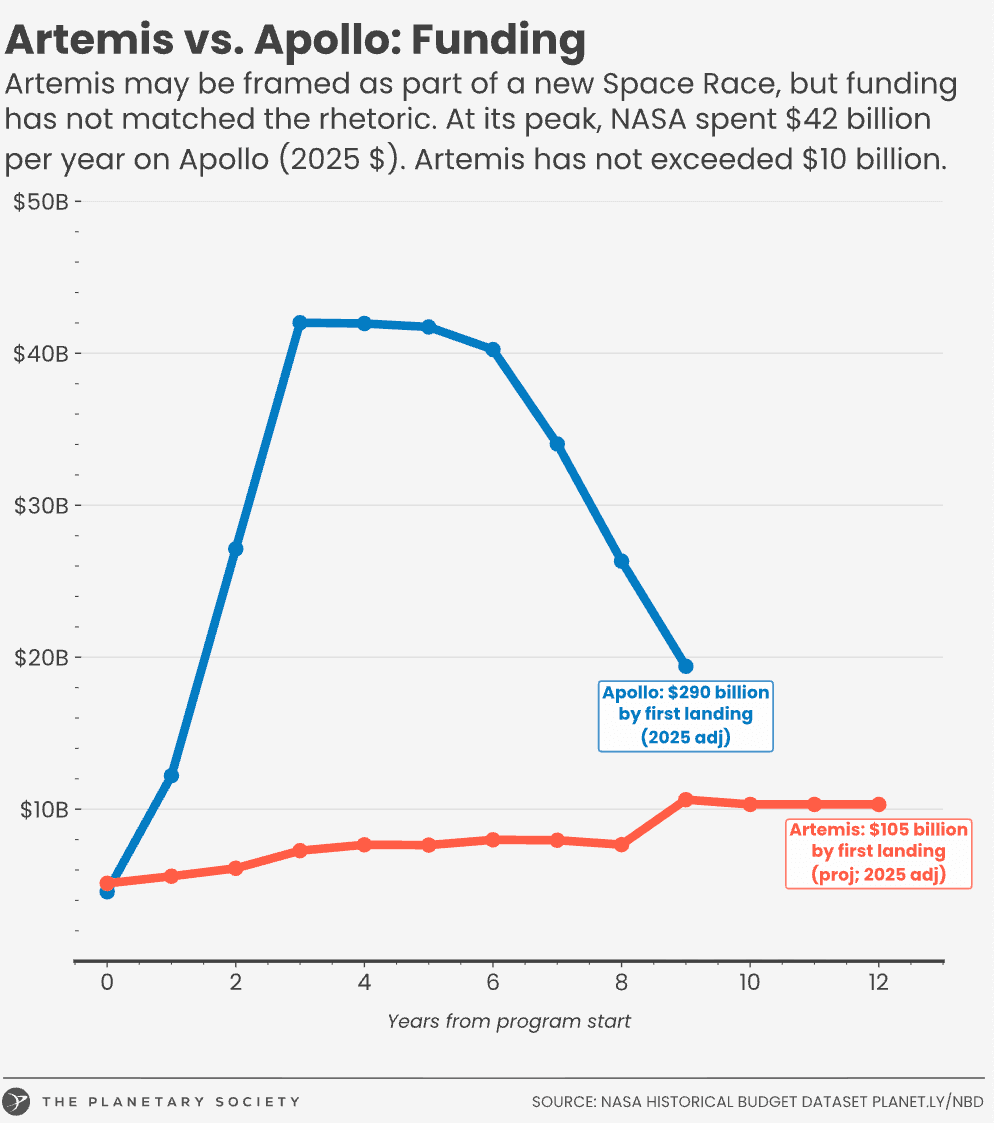 Source: The Planetary Society