Originally published in iHeart.
Welcome to mtf.tv's DECISION MAKER BRIEFS... your future-proof memo to orient toward infinity (and beyond) with the futurists on the frontlines of building tomorrow... today.
FUTURIST: Max Haot, CEO of Vast
INFLECTION POINT The International Space Station (ISS) is scheduled for retirement and deorbit by the end of 2030. NASA’s long-standing plan has been a transition to commercially owned and operated Low Earth Orbit (LEO) destinations, with private companies (including Vast) positioning as anchor tenants and service providers for NASA, allies, and sovereign customers.
However, at NASA’s March 2026 “Ignition” event under Administrator Jared Isaacman, the agency floated a significant alternative: a government-owned and -built core module that commercial stations could potentially attach to. This has introduced uncertainty, as it deviates from the pure commercial model that has attracted billions in private capital. Vast and industry peers argue this approach would be slower (7–10+ years), more expensive, and less likely to unlock private investment or deliver multiple redundant stations by the 2030 deadline.
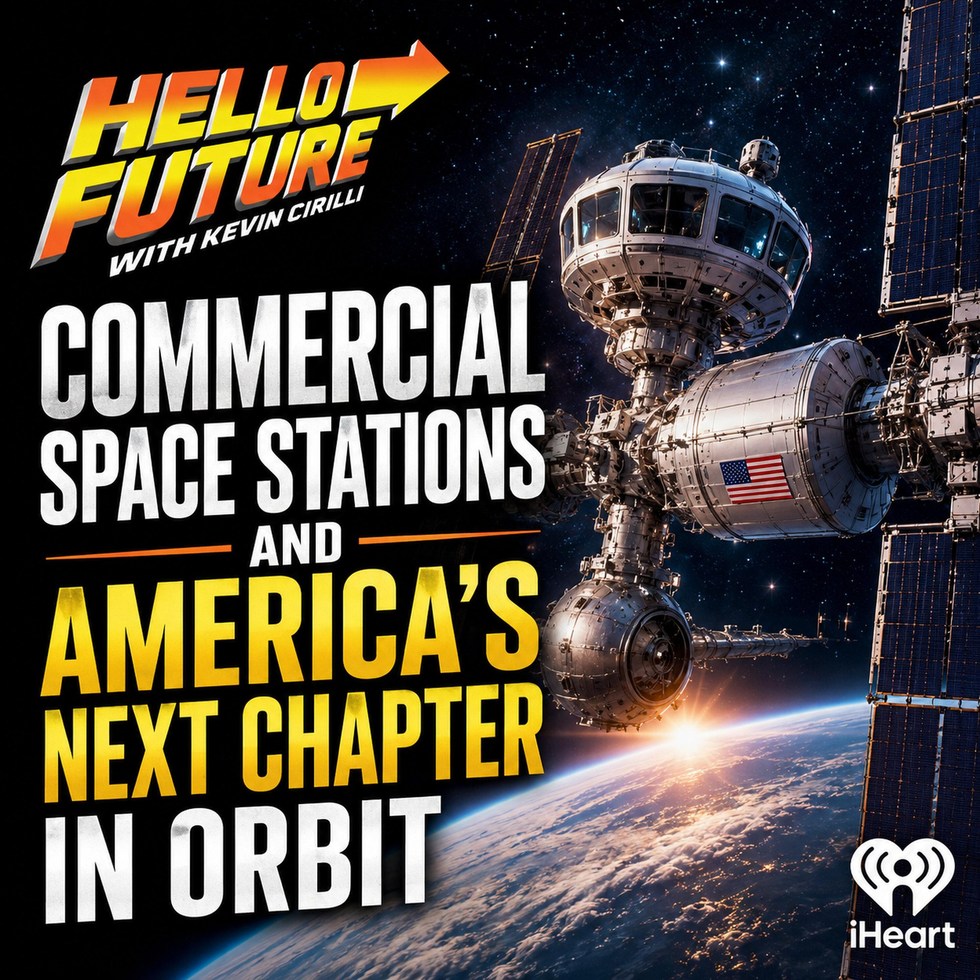
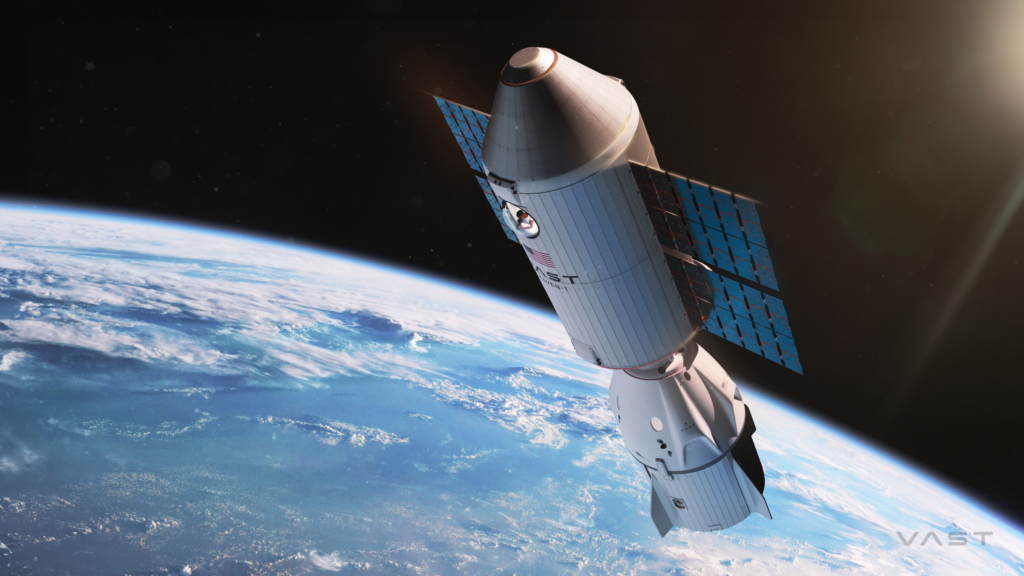
Vast is furthest along: Haven-1 (the world’s first commercial space station) is in integration in Long Beach, with launch now targeted for Q1 2027 on a SpaceX Falcon 9. The company recently unveiled its Large Docking Adapter — a new open-source standard engineered for higher-mass modules, greater structural rigidity, and improved crew/cargo transfer, designed for the next generation of larger stations and vehicles while building on existing interfaces.
WHY YOU CARE
- Strategic & national security imperative: A gap in U.S./allied continuous human presence in LEO after 2030 would hand China a multi-year monopoly with its Tiangong station (and planned expansions). Multiple independent commercial stations provide resilience and redundancy.
- Speed & cost: Commercial providers leveraging private capital, vertical integration, and simpler designs can move faster and cheaper than traditional NASA-led programs. Taxpayers benefit from private investment and ownership.
- Economic & diplomatic upside: Enables NASA, ESA, JAXA, and emerging spacefaring nations (UAE, Saudi Arabia, others) to maintain science, research, and astronaut presence. Creates a sustainable market beyond government anchor customers.
- Signal to markets & allies: Decisive NASA action this year on the Commercial LEO Destinations (CLD) path would de-risk billions in private investment and reinforce U.S. leadership in the commercial space economy. Delay or a hybrid government-core model risks ceding momentum.
NEAR-TERM CATALYSTS (0–36 MONTHS)
- This year (2026): NASA must decide on the path forward, issue clear procurement direction for CLD Phase 2 (or equivalent), and make selections. Feedback on the Ignition proposal is being collected — industry strongly favors returning to a decisive commercial approach. Any slippage into 2027 makes a seamless 2030 handoff nearly impossible.
- Q1 2027: Vast Haven-1 targeted launch — the first U.S. commercial space station. A major proof point for the model.
- 2026–2027: Vast and competitors advance hardware; international partners (ESA, JAXA) expected to commit to whichever U.S. commercial station(s) NASA selects. Vast also flying a private astronaut mission to the ISS (target no earlier than summer 2027).
- Ongoing: Industry response to NASA’s RFI/feedback process; potential for multiple stations to ensure redundancy.
HORIZON SCAN By 2030 the goal is continuous (ideally multi-station) U.S. and allied human presence in LEO. Vast is targeting scaled capability with Haven-2 for continuous crewed operations. Success of the commercial model unlocks a vibrant ecosystem: sovereign astronaut missions, research, manufacturing, tourism, and national security applications.
Open standards like Vast’s Large Docking Adapter accelerate interoperability and larger, more capable architectures. If the commercial path prevails, private capital and competition drive down costs and increase cadence. A government-core hybrid risks delays, higher taxpayer burden, and reduced private-sector momentum. China’s parallel progress makes 2026 decisions strategically time-sensitive.
MARKET SIGNALS
- Private capital & execution: Vast has raised significant funding (hundreds of millions), employs 1,000+ engineers/technicians focused on human spaceflight, and has real hardware in integration. The company is deploying substantial additional investment ahead of launch.
- Innovation edge: Large Docking Adapter (unveiled April 2026) as an open-source enabler for future large-scale stations — higher performance, broader compatibility.
- Competition & redundancy: Multiple U.S. companies are competing; at least one (ideally two) proven, safe, long-duration stations needed by 2030.
- Customer diversification: NASA as anchor (but not sole) customer; strong interest from ESA, JAXA, and growing sovereign demand worldwide. Commercial ownership model allows monetization across government and non-government users.
- Risk signal: Any prolonged uncertainty from NASA slows investment and hiring; decisive action this year is the clearest catalyst.