

FUTURIST: Dan Wachtler, co-founder and CEO of Vigilis, Inc. (Vigilis AI), the company integrating real-time AI capabilities into physical security infrastructure and operations. Board advisor to the Foundation for Defense of Democracies’ Center for Cyber and Technology Innovation. Over 25 years leading at the intersection of cybersecurity, physical security, financial crime compliance, and AI — including prior roles as CEO of IPSA International and DarkLight, and president of root9B Holdings. Collaborator with the Federation of American Scientists on responsible technology governance.
INFLECTION POINT: Dan Wachtler has spent his entire career watching the walls between physical security and cybersecurity crumble in real time — and building the tools to finish the job. For decades, organizations treated a security camera as just a camera, an access badge as just a badge, and a firewall as just a firewall. Data stayed siloed, reviewed after incidents, and interpreted by humans working at human speed.
That model is dead. Adversaries already fuse physical access, cyber intrusion, and influence operations into single, coordinated campaigns. Wachtler’s work at Vigilis demonstrates what replaces it: AI that correlates signals across domains instantly — spotting not just an unauthorized door opening or a network anomaly, but the linked pattern that reveals a hybrid attack in progress. This is the convergence moment, and it is not theoretical. It is being built and deployed now.
At the same time, Wachtler is clear-eyed about a quieter but equally dangerous threat: a sustained disinformation campaign aimed at AI and the data centers that power it. The goal appears to be making the public — and policymakers — fear the very technologies that could harden critical infrastructure and accelerate detection. His core warning is simple and practitioner-grounded: the risk is not that AI will outsmart humans. “We humans are much smarter than computers.” The risk is that manufactured fear will delay or distort deployment of tools that adversaries are already using against us.
WHY YOU CARE
- The next major incident will be hybrid by design. Siloed physical and cyber teams create exactly the seams sophisticated actors are trained to exploit. Decision makers who still manage these domains separately are operating with structural blind spots.
- AI is the only scalable integrator. Manual correlation across video, access logs, network telemetry, and behavioral signals is already impossible at enterprise or national scale. Wachtler’s Vigilis platform shows what becomes possible when AI turns physical security infrastructure into real-time intelligence engines.
- Disinformation is a force multiplier for our adversaries. When public and political resistance to AI grows, it slows the very capabilities that could protect data centers, critical infrastructure, and democratic institutions. Wachtler sees this not as abstract debate but as a direct operational risk.
- Policy lag creates strategic vulnerability. The United States has the talent and industrial base to lead. What it lacks is coherent, durable AI security policy. Every month of polarization hands competitors a larger advantage in setting the technical and governance standards for converged security.
NEAR-TERM CATALYSTS (0–36 MONTHS)
- Integrated platforms moving from pilot to production. Real-time AI correlation across physical and cyber domains will expand rapidly in critical infrastructure, defense-adjacent facilities, and large enterprises. Early adopters will shape de-facto standards.
- Procurement and standards pressure. Organizations and agencies will face growing requirements (or competitive pressure) to demand cross-domain data sharing, auditability, and human oversight in AI security systems from day one.
- Counter-disinformation efforts intensify. High-visibility incidents involving AI-enabled attacks or attacks on AI infrastructure will force clearer public and policy communication. Practitioners like Wachtler who can explain capabilities and limits credibly will become essential voices.
- FAS-style governance initiatives gain traction. Efforts to translate scientific and technical expertise into actionable, values-based policy frameworks for AI security will accelerate as the stakes become impossible to ignore.
HORIZON SCAN (2027–2035): By the early 2030s, the distinction between “physical security” and “cybersecurity” will feel archaic in any serious organization. The leaders will operate unified security fabrics where AI continuously fuses physical presence, digital behavior, supply-chain signals, and influence indicators — enabling faster detection, coordinated response, and in some environments, semi-autonomous action under human oversight.
Wachtler’s perspective, shaped by decades building and operating these systems plus deep engagement with the Federation of American Scientists, points to a clear fork: nations and companies that treat AI security governance as a core national security function — demanding transparency, auditability, and alignment with democratic values — will set the global norms. Those that do not will either adopt frameworks shaped elsewhere or operate in a fragmented, higher-risk environment. The technology itself is not the decisive variable. The decisive variable is whether democratic societies move with clarity and speed to direct it.
RECOMMENDED ACTIONS
- Audit the seam now. Map where your physical security systems and cyber systems stop sharing data or coordinated response. That gap is already a vulnerability Wachtler has spent his career closing.
- Procure for convergence. Make real-time cross-domain correlation, explainability, and human oversight non-negotiable requirements in new security technology evaluations.
- Treat disinformation as operational risk. Invest in clear, non-hype communication about what AI-enabled security does and does not do. Silence hands the narrative to those seeking to slow Western progress.
- Engage on policy while there is still time. Support or help shape durable AI security standards that emphasize auditability and human oversight — standards that can serve as a credible Western model for allies.
- Build the integrated bench. Create career paths and fusion roles that reward people who can operate comfortably at the physical-cyber-AI intersection. Talent that can do this is still scarce and will define competitive advantage.
Dan Wachtler’s career sits at the exact intersection where the next generation of security will be decided. He is neither alarmist nor dismissive. He is a builder who has seen the silos fail in practice and is now constructing the systems that replace them — while warning that fear and political paralysis are the only things that can stop us from using them effectively. The technology is ready. The harder work is building the policy architecture, dispelling manufactured anxiety, and making converged, AI-augmented security the new standard before the threats force the issue on worse terms.










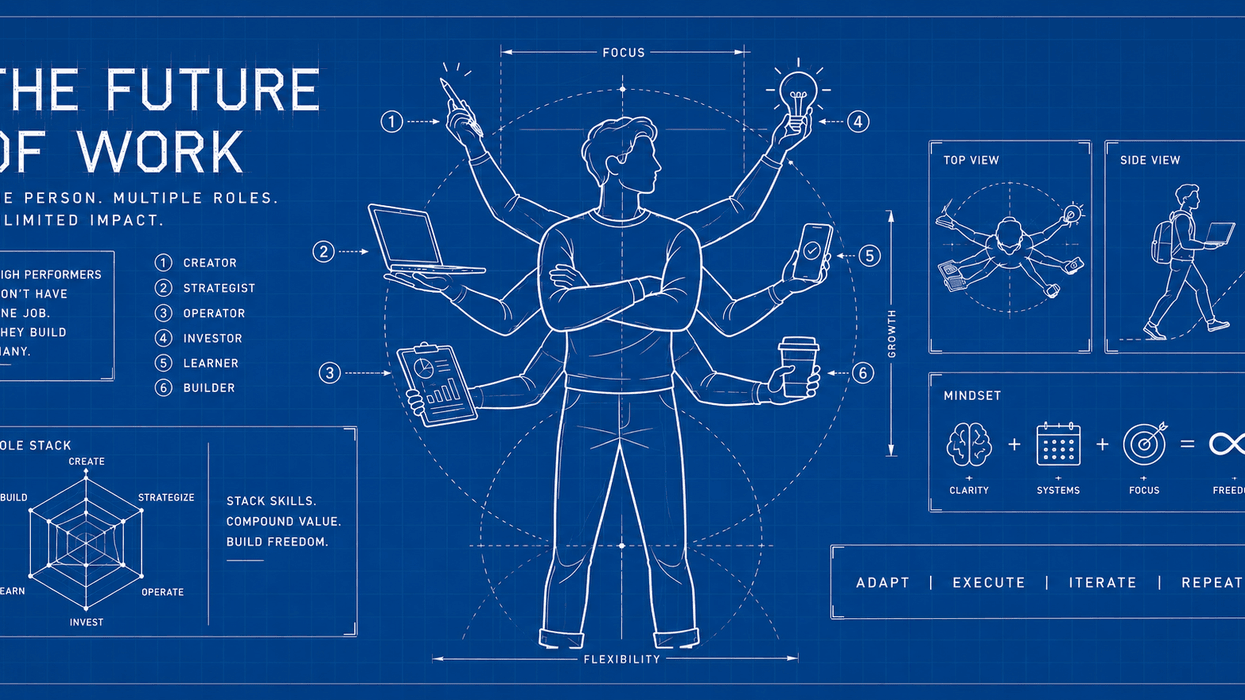
 Why Top Talent Is No Longer Betting Everything on One Employer

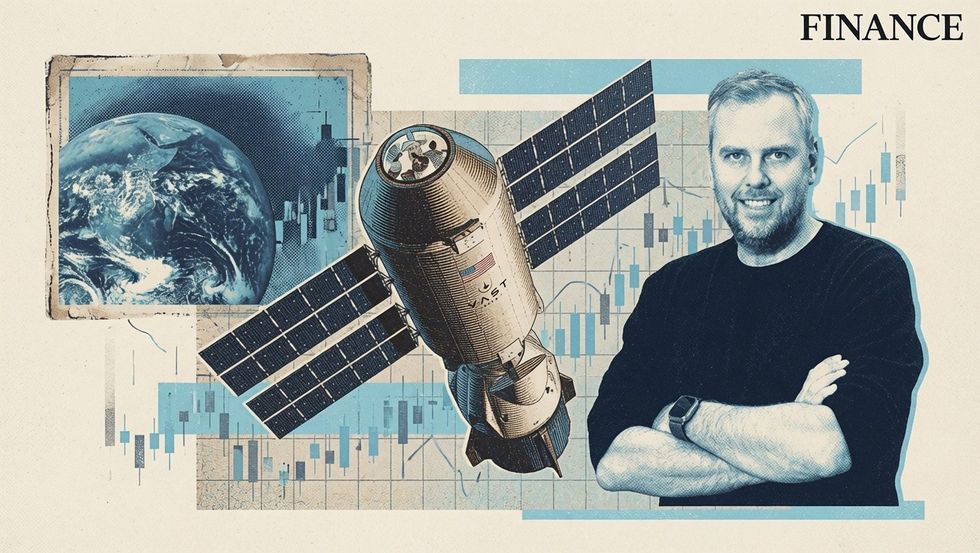 Meet the CEO Who Wants to Replace the International Space Station mtf.tv