WELCOME to SPACE <GO> -- my weekly business of space tipsheet helping you put into context the constellations of business, space, and Washington.
NASA TAPS ERIC SCHMIDT’S RELATIVITY FOR MARS MISSION — NEW PRESSURE ON SPACEX. NASA has awarded Relativity Space a contract to build and launch the Aeolus spacecraft for a 2028 Mars mission. The orbiter will deliver the first daily global observations of Mars’ atmosphere, providing critical data for future landers and crewed missions. Relativity, which was acquired by former Google executive Eric Schmidt last year, will handle both the spacecraft and the launch under a commercial services model similar to NASA’s deals with SpaceX.
--> WHAT IT MEANS FOR SPACEX: This marks one of the first times NASA has given a full Mars mission — spacecraft plus launch — to a company other than SpaceX. While SpaceX remains the clear leader in Mars ambitions through Starship, the award introduces a second credible commercial player on the Red Planet. It signals that NASA is willing to diversify its deep-space providers rather than rely solely on one company.
--> WHAT IT MEANS FOR BLUE ORIGIN The impact on Blue Origin is more indirect. Bezos’ company is currently focused on the Moon through its Blue Moon lander for NASA’s Artemis program. However, the Relativity award reinforces NASA’s broader strategy of using commercial partners for major exploration missions. This approach could eventually extend beyond the Moon and create more competition across NASA’s portfolio.
--> BOTTOM LINE: By selecting Relativity Space, NASA is quietly expanding its options beyond SpaceX for Mars missions. For Musk, it introduces a new commercial rival on Mars. For Bezos, it’s a reminder that NASA is serious about building a multi-company commercial ecosystem for deep space — even if Blue Origin remains more focused on the Moon for now.
Source: Yahoo Finance; NASA
Meanwhile... on Mars...
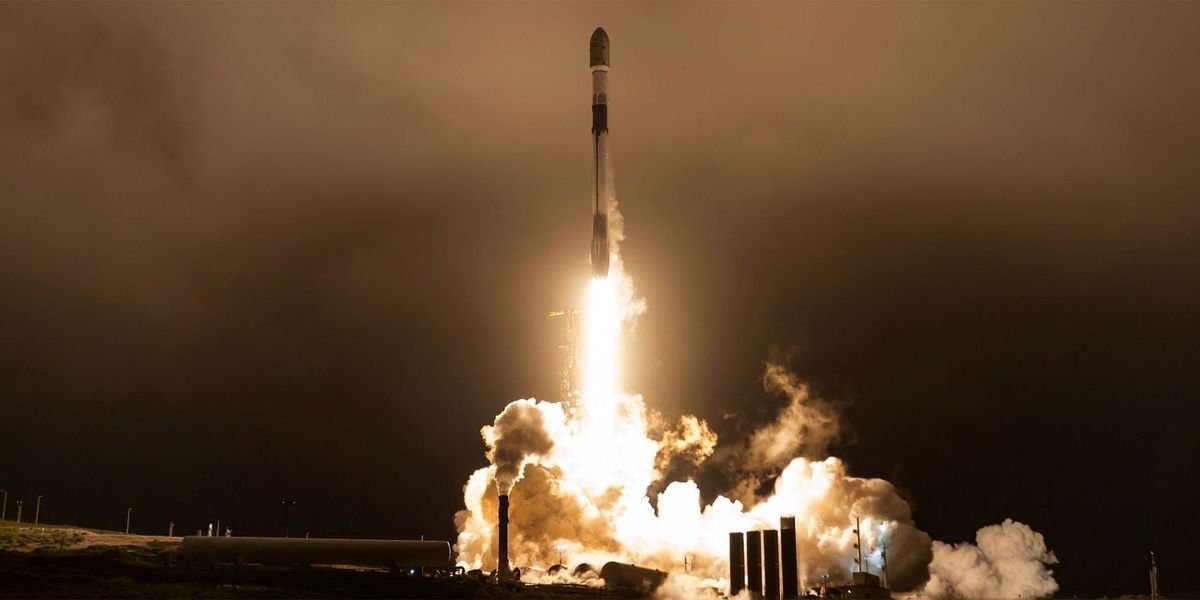
GOLDEN DOME GETS A SPACEX BACKBONE. SpaceX launched its 14th dedicated mission for the National Reconnaissance Office on June 19, adding more satellites to the growing constellation that serves as the foundation for the Pentagon’s Golden Dome missile defense program.
THE LAUNCH: The NROL-179 mission lifted off from Vandenberg Space Force Base aboard a Falcon 9, successfully deploying additional satellites into low Earth orbit. This marks the third NRO launch of the year for SpaceX and continues the steady expansion of the proliferated architecture designed to provide persistent intelligence, surveillance, and reconnaissance.
--> GOLDEN DOME CONTEXT: Golden Dome is the U.S. military’s $185 billion effort to build a next-generation missile defense system capable of countering advanced threats from China and Russia. The program depends on a large network of satellites for tracking and targeting. SpaceX plays a central role through a $6.45 billion contract covering both space-based sensing and resilient communications.
--> WHY IT MATTERS: The shift to a proliferated constellation of smaller, lower-cost satellites is replacing older, more vulnerable systems with a more resilient and responsive architecture. These satellites enable much faster revisit rates and data delivery, directly supporting real-time targeting and decision-making. For SpaceX, these recurring national security launches provide consistent, high-value flight cadence.
--> BOTTOM LINE: SpaceX continues to strengthen its position as a core provider of U.S. national security space infrastructure. As Golden Dome scales, these NRO missions are quietly becoming a major part of the company’s defense business.
Source: TechTimes
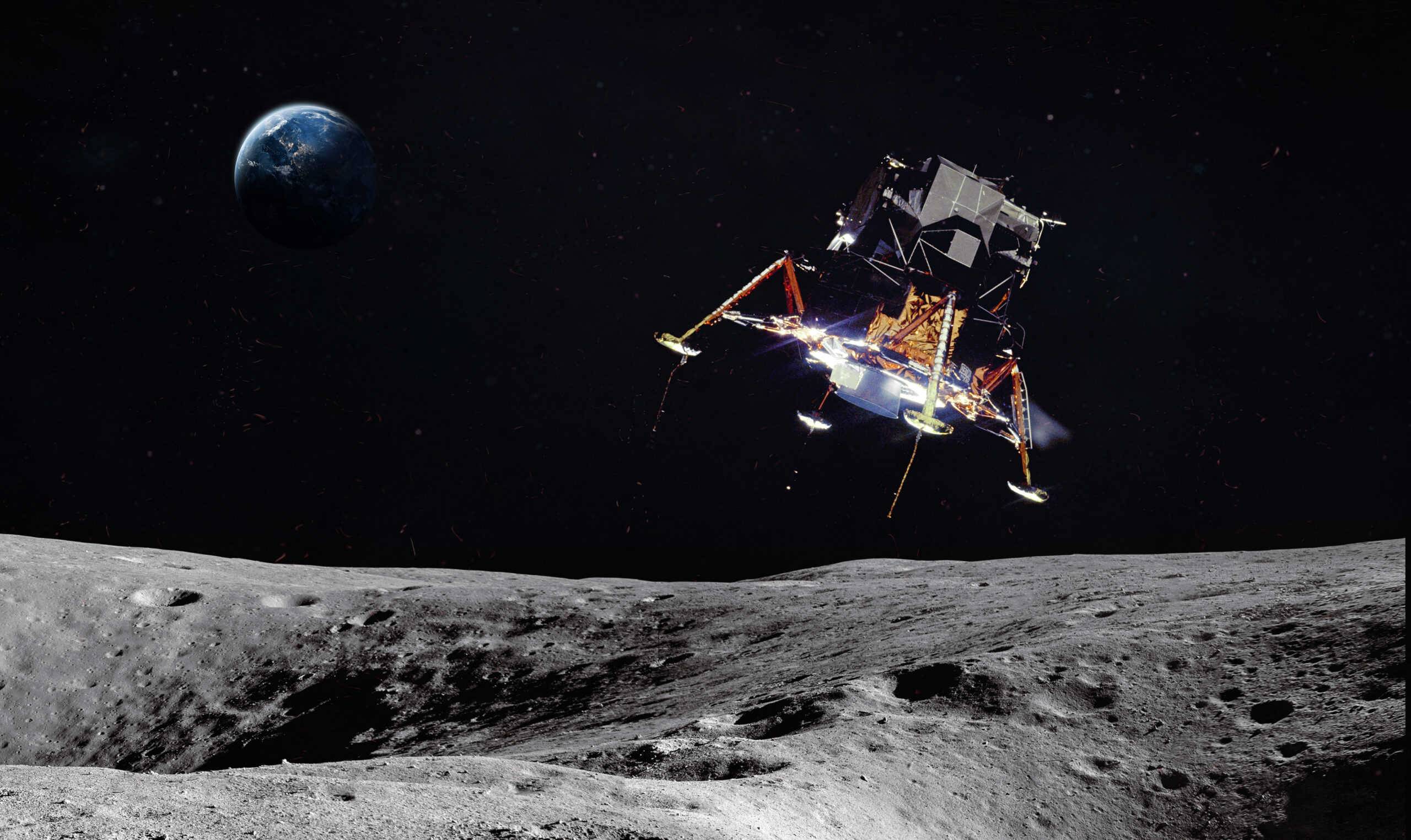
NASA BACKS INTERLUNE TO MINE HELIUM-3 ON THE MOON BY 2028. NASA has awarded Interlune a $6.9 million contract to develop and fly a demonstration payload designed to extract helium-3 directly from lunar regolith. The Seattle-based startup plans to launch its “Prospect Moon” mission in 2028, marking one of the first serious attempts to prove in-situ resource utilization for a high-value material on the lunar surface.
--> THE NASA SUPPORT: The funding comes through a Phase III Small Business Innovation Research award under NASA’s Game Changing Development program. Interlune will use the money to build flight hardware that can excavate, heat, and separate volatiles from lunar soil. The mission is timed to align with Artemis IV, giving the company access to the lunar south pole infrastructure NASA is building.
--> THE HELIUM-3 PLAY: Helium-3 is a rare isotope on Earth but is relatively abundant in lunar regolith due to billions of years of solar wind exposure. It has growing commercial demand for use in quantum computing cryogenics, medical imaging, and neutron detection. Interlune already has purchase commitments, including from the Department of Energy and cryogenics company Bluefors, and is developing terrestrial separation technology as a bridge while it prepares for lunar production.
--> WHY IT MATTERS: This is one of the clearest signals yet that NASA is willing to fund commercial efforts to extract and utilize lunar resources. While the initial payload is a demonstration, success could open the door to larger-scale helium-3 mining and broader in-situ resource utilization. It also shows NASA supporting companies targeting specific high-value materials rather than just generic lunar infrastructure.
--> BOTTOM LINE: Interlune is moving from concept to hardware with real NASA backing and early commercial customers. If the 2028 demonstration succeeds, it could establish helium-3 as one of the first economically viable resources extracted from the Moon.
Source: Space Daily
-- Kevin Cirilli, founder mtf.news (meet the future).


 Elon Musk Fox Business Network