Skip to content
Search

Latest Stories

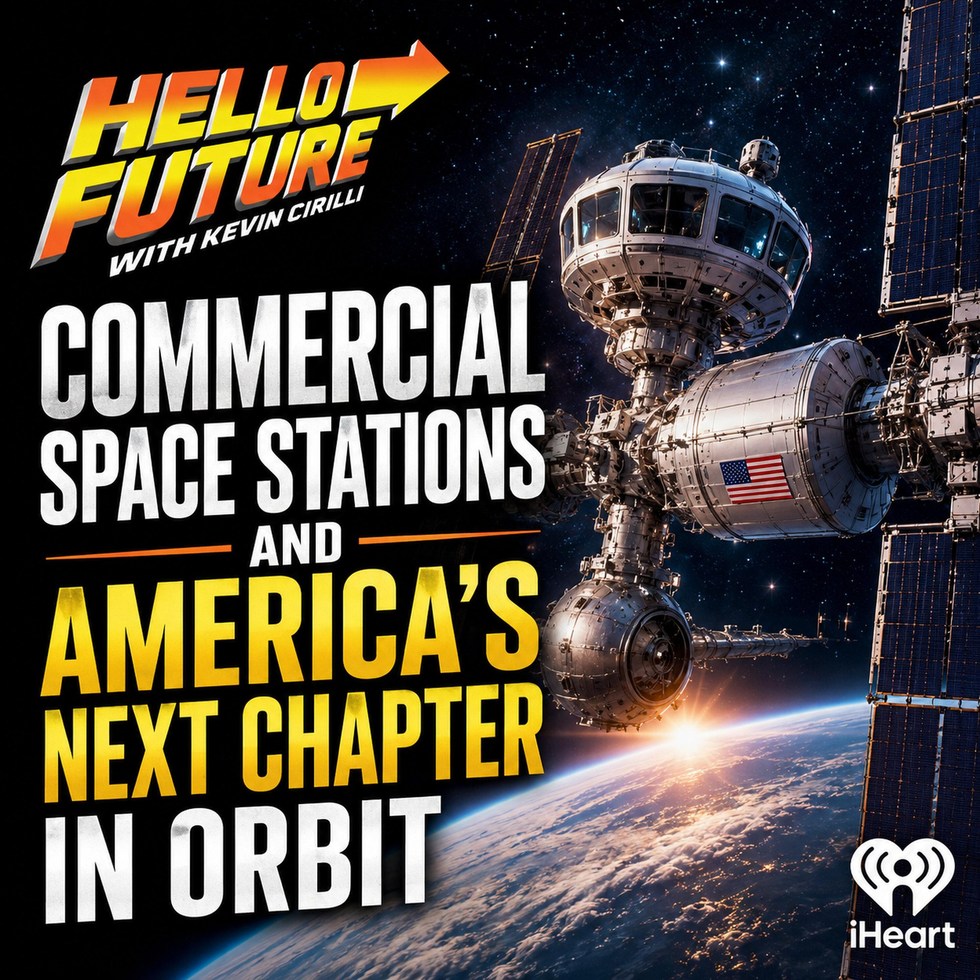
HELLO FUTURE: Commercial Space Stations and America’s Next Chapter in Orbit

HELLO FUTURE: Commercial Space Stations and America’s Next Chapter in Orbit


In this episode of HELLO FUTURE, host Kevin Cirilli speaks with Max Haot, CEO of Vast, about the urgent need for commercially developed space stations as the International Space Station approaches retirement. 

Haot, who has been outspoken about NASA’s cost overruns and the need to refocus resources, explains why the current “riskiest period” in ISS operations demands real action now. With Vast’s Haven-1 already in integration and targeted for launch in 2027 as the world’s first commercial space station, the conversation explores the viability of private capital stepping up where government budgets are stretched. Vast recently unveiled its Large Docking Adapter — a new open-source standard designed for the next generation of larger space stations and crewed vehicles — which supports significantly higher mass, greater structural rigidity, and dramatically improved crew and cargo transfer capabilities while remaining compatible with existing docking systems.


Haot discusses what NASA would actually need to contribute versus the long-term returns to the country, how Vast is approaching safety and mission design differently, and why this hardware-rich, incremental approach gives the company confidence it can deliver continuous human presence in low Earth orbit by 2030 — even if NASA’s budget faces further pressure.

Meet The Future: https://mtf.tv/

See omnystudio.com/listener for privacy information.

Speaker 1 (00:07):
The International Space Stations days are numbered, and it doesn't
mean the end of International Space Station. What it means
is independent space stations in the commercial sector are going
to be up there in outer space. Hello Future, It's
me keV. This is a dispatch from the Digital Frontier.
The planet is Earth. The year is twenty twenty six.
My name is Kevin SERIALI. You can follow all of
the latest news about the future over at MTF dot
tv and check out the latest Hello Future episodes. However,
you get your podcasts as well as on the iHeartMedia app.
My guest today returning to the program honestly probably one
of my favorite guests that I've gotten to interviews since
doing this with Hello Future. His name is Max Hout
and he is the CEO of Vast. Vast is one
of these companies that is building space stations to replace
the International Space Station. They've already gotten like something like
five hundred million dollars in funding, and Max is one
of those people who's building the future, quite literally, building
the space economy. So Max, we have a lot to
talk about today. I want to talk about NASA though,
because I've been following this and I know a lot
of our audience has been following this and you and
your company have been talking about this, about the signals
that NASA is giving or not giving in terms of
creating the future market for replacement of the International Space Station.
So let's just start there, give us a state of
play of where things are.

Speaker 2 (01:48):
Yeah, so the you know, thank you for having me again.
Great to see you. Quest Kevin.

Speaker 3 (01:52):
So i'll market of the companies that are building and
planning to operate a space station. Commercial space station for
the first time was really kicked off by the opportunity
that President Trump announced Pritzon Trump in twenty eighteen or
so that there was a plan to basically retire the
International Space Station and instead of building a new one,
NASA should be one of many customer future commercial space stations.
That sets up a chain reaction of a bunch of companies,
including ourselves, that really organized themselves around this opportunity to
basically have a NASA as an anchor customer as one
of many customers, and to provide a safe and lower
cost platform in space in lower for bit so that
NASA astronaut but also all of our allies could have
a continuous human presence in space there and so that
that's been the status quo for you know, since that time,
there's been a different competition and stages that NASA is
organized and invested at various level to really prepare for
this transition and to take a step back, the deadline
is the end of twenty thirty when the International Space Station.

Speaker 2 (03:02):
Is due to be retired.

Speaker 3 (03:04):
Right it is leaks, it's a partnership with Russia, which
is not ideal, it's aging, but most importantly it's unsustainable
to the taxpayer and from a cost point of view.
So that's the deadline that has been set and organized
to deorbit the ISS, and so we have to make
sure that commercial provider including VAST have to you know,
at least one of us, ideally two of us have
to have a proven safe, loge enough space station that
can take on the baton of the continuous presence of
American astronauts in lower Phobit from that from that point on.

Speaker 1 (03:36):
So I think this is fascinating. And folks, if you're
just joining us, make sure you go back into the
archives and listen to my earlier interviews with Max because
you can get all about his background and how he
came to this be the CEO of vast And you
know you said one or two companies, candidly, Max, I
would like to see two dozen. I think we need
more and more space. The more folks in America based
companies that we have up and outer space, the better.
Jared Isaacman, though he's the head of NASA, he's been
really vocal about NASA's cost overruns and trying to I
guess refocus resources. No one wants to be wastefully spending.
But is a commercial space station a financially viable option
for this moment? Because I mean you would know better
than me. But if America's presence in space isn't ready
when the ISS retires in twenty thirty, I mean that
is a horrible, horrible signal to send to the global economy.

Speaker 2 (04:39):
Yeah, I mean, we can't let that up. And we
just cannot, right.

Speaker 3 (04:42):
And you know, if you look at the different paths
that are available in solutions, you know we believe the
commercial path is by fa the fastest. You know, the
a few companies including VAZ that already to answer the
call and to be ready by the end of twenty thirty.
What we need is we need NASA to be decisive
to make a decision and award the next phase of
this procurement called commercial your destination, and to support us
into creating this space station so that it can be
ready on time.

Speaker 2 (05:12):
That's really the next step.

Speaker 3 (05:14):
Thinking about you know, the recent NASA event colled Ignition
that was organized by Jared isaac Man. It was an
incredible event where, you know, within three months on the job,
Jared isaac Man, the NASA administrator, unveiled, you know, an
incredible plan for the Moon and many other initiative. One
of the topics were the replacement of the ISS and
the transition to the commercial space station. And during that event,
they proposed an alternative plan, not a commercial plan, but
a plan where NASA would design and build a new
core module that they would attach to the ISS, and
commercial companies could could maybe attached to that. But it's
a really big change to the approach and the plan
because this module would be no will be owned by
saying that proposal. Now, the good news, right is that
it is just a proposal. Jared isaac Man made it
very clear that it's a proposal. They want to get feedback.
They issued the same week an URFI and we responded
to that URFI expressing real concern of this approach that
it is not clearly not the lowest cost, not the
fastest way to ensure that we have you know, at
least two space station ready by the end of twenty thirty.

Speaker 1 (06:27):
Seems like a very significant change though as well, especially
from an administration that wants to encourage private sector business.
Essentially to say that the private industry, what I interpreted
from that decision was a signal that the government isn't
willing to get out of the international Space station replacement business.
That's a very different and candidly, it doesn't seem like
a capital market friendly approach.

Speaker 3 (06:59):
Yeah, I mean, it's a if they proceed, right, this
is only your proposal, but if they proceed, that's a
complete change from the promise that it's building market that
they've raised, you know, billions of dollars between US and
our and our competitors for this, this plan and this
opportunity to to to be able to provide to the
US government but also governments around the world, the commercial alternative.

Speaker 2 (07:22):
To to to the ISS.

Speaker 3 (07:24):
The alternative plan will take maybe seven to ten years,
this this idea, and we don't have enough time. Will
definitely exceed the budgets that that have been proposed for
the commercial your destination. And one of the main advantage
of the commercial approach is that it's simpler for companies.
You can build a simpler system. But also we, you know,
NASA and the taxpayer get the benefit of private investment
because we end up owning the space station and we
can monetize it and we have a built in customer base,
and so that that's a very investible value proposition and
business plan. The alternative, which is a NASA on and
build a module, you know, cannot really unlock all this
private all this institutional and private capital there. So the
proposed alternative approach is not a solution. And we you know,
we all confident that through the feedback things will will
get back to a plan that we think is solid
and makes sense.

Speaker 1 (08:23):
See, my job is to help translate the what I mean.
I'm listening to you and folks are listening to this.
But it's probably good they can't see me shaking my
head because I can't believe that the Chinese Communist Party
has a space station in outer space. Right now, folks,
the Chinese Communist Party has a space station, right now
in outer space doing god knows what with who knows who. Okay,
there's no separation in communist China between the communist state
and their private sector. It's the communist sector over in China.
I say this because when the International Space Station, when
that thing comes back down and gets out of space
in the year twenty thirty. What max Out, the CEO
of VAS, just told us is that if the government
keeps it, just the government from putting up space station
replacements and shuts the door to the private sector, China
could have five to seven.

Speaker 2 (09:20):
Years on their own in outer.

Speaker 1 (09:23):
Space, Shijingping's dream in the final frontier and private sector
and innovation is America's best export, It's the West's best export.

Speaker 2 (09:33):
Why would we not do that?

Speaker 1 (09:34):
I want to ask you a couple more questions on this,
max Out CEO of VAS with me. We just saw
this incredible Artemis two crew head to space and return safely.
I know that you guys are always thinking about safety.
You've got your Haven station. Haven one is already an
integration Haven two is targeting continuous crew capability by twenty thirty.
I want you to give it to me blunt if
JAREDI Sigman is listening to this conversation or his staff
gives him the transcript of our conversation. I want you
to say, what do you need and buy when? For
NASA to do.

Speaker 3 (10:10):
I think they're already doing a big part of it,
which is to be collaborative and listening.

Speaker 2 (10:15):
They are huge.

Speaker 3 (10:16):
Proponent of the private sector and obviously of partnering with companies,
so that is already happening now. In terms of a
specific we need to make a decision. We need to
pick a path. We obviously have strong opinion about what
the path should look like, but we need to do that,
and then we need to issue the procurement and then
partner and then get moving.

Speaker 2 (10:35):
Obviously we need to earn that partnership. We have to compete.
We can't just receive it.

Speaker 3 (10:40):
We definitely need the chance to compete, the chance to
send our proposal, and then NASA to be in a
position to make a selection this year. And I think
that's key right with twenty thirty arriving really soon. If
this spills over into twenty twenty seven, you know at
that point we have no chance. So our clear message
is that we need a solution this year, and we
need to move quickly, and we are ready to do
it collaboratively and you know, deploy one point five billion
of investment, not just five hundred million, but prior to that,
we had raised close to a billion dollar more than
a thousand amazing engineer and technicians that are working on
human space flight technology for America and our first space
station module, Heaven one, which as you mentioned, is in
integration and we'll launch early next year. So we have,
you know, over the last three years, built and invested
in all of this to be ready to answer the
call to build America's next space station, and we hope
we will have the opportunity. And you know, right now
obviously there's a little bit of instability in the proposed
alternative direction, but we hope that it comes back to
stability that investor can rely on, that our team can
rely on, and we can get on build building that
space station.

Speaker 1 (11:54):
Last question for you, NASA is just one customer. So
who else is Vast building Haven modules for? And is
that and I would assume that's another sustainable business model.
If NASA's budget gets continued to get further cut.

Speaker 2 (12:09):
I mean, the.

Speaker 3 (12:09):
Key is we need to have a business model that
gathers to profitability relatively quickly, right and especially if the
government is relying on us, we need to make sure
we have a business plan that closed. Two side to
that there are securing customers and then there is also
your cost base. So one of the elements we cannot
forget is that part of the innovation of commercial is
that we are able to do things at are lower
cost using slightly different approach, using vertical integration, and that
in itself translate in cost saving for the taxpayer and
in foro NASA just moving from a system that's designed
and onned by NASA to a system that's designed for
NASA but by the private sector and on by a
private company. In terms of customer on number one customer
or sovereign nations around the world, you know, NASA being
one of the largest, maybe the largest of our customer,
but definitely not the only one.

Speaker 2 (13:03):
The other anchor builders.

Speaker 3 (13:05):
Of the International Space Station, which are the European Space
Agency representing Europe, the Japanese Space Agency JACKS are representing
Japan are expected to be customers of whoever NASA select,
and have stated that they will be so that they
can continue to have a permanent presence in lower forbit
and bring all of the science and research from their.

Speaker 2 (13:26):
Region, and then that market is expanding.

Speaker 3 (13:28):
We've seen more and more government and countries launching in
space their first astronaut. You know, in the Middle East,
you've seen missions with the UAE and Saudi Arabia. In Europe,
there's been many countries that were not directly with the
European Space Agency or the ISS getting into human spaceflight.
And so that market of sovereign government astronaut and sovereign
space mission human space flight mission is growing. But we
definitely need NASA to be the you know, the to
be jumping in there as a customer as the mised
then planned for that tool workout.

Speaker 1 (14:03):
Awesome, Max Holt, thanks so much for giving us a
lay of the land and folks in the space industry.
This topic is literally it's as if the FED chairman's
giving a press conference. I mean that is, everyone is
trying to figure out what NASA is going to signal
and how they're going to signal investment and purchasing with
regards to the replacement of the International Space Station. Thanks
for listening to this episode. Remember check out all the
latest episodes on your iHeartMedia app,

More For You