DECISION MAKER BRIEF: YOUR SPACE COACH? WHY CIVILIAN SPACEFLIGHT IS BECOMING A WORKFORCE, CULTURE, AND HUMAN CAPITAL REVOLUTION. Humanity is entering a new era where space is no longer reserved for elite astronauts, military pilots, or billionaire thrill-seekers. As commercial launch systems mature and lunar missions accelerate, the frontier is shifting from government-led exploration to civilian participation. The new question is not simply who goes to space — but how societies prepare ordinary citizens to think, train, work, and live like a spacefaring civilization. The future of space may begin not with rockets, but with a mindset: every citizen becoming more “space ready.”
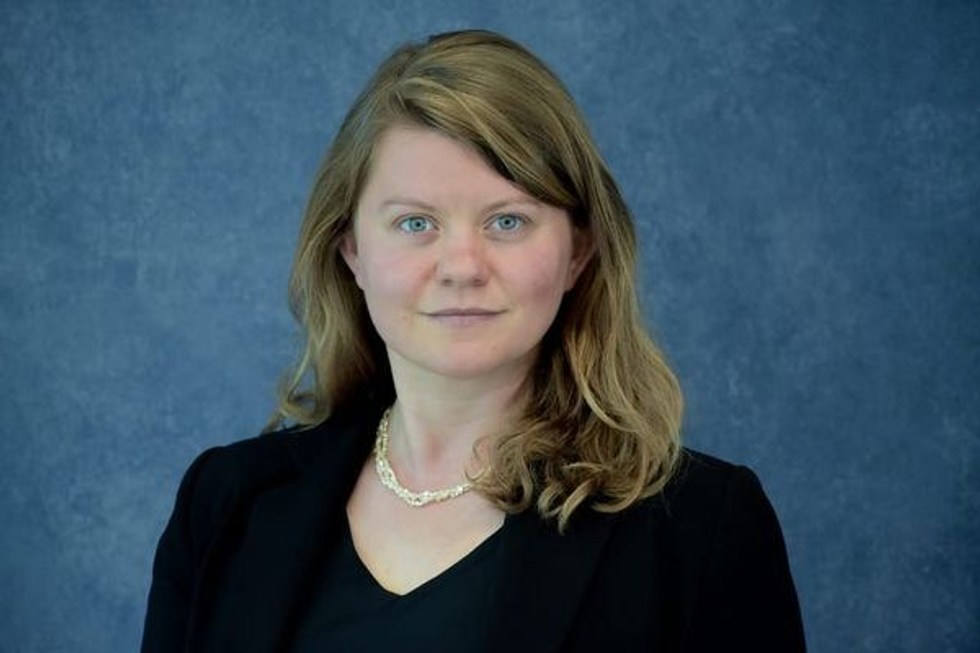
FUTURIST: Kirby Runyon, planetary geologist, science communicator, and researcher affiliated with the Planetary Science Institute and The Planetary Society. Runyon studies planetary geology across the Moon, Mars, Pluto, Triton, and other bodies while helping bridge the gap between scientific expertise and civilian engagement. Featured on HELLO FUTURE with host Kevin Cirilli, founder of mtf.tv.
Go Deeper
- Artemis II: Humanity’s return to crewed lunar exploration is reshaping conversations around workforce readiness, science literacy, and lunar infrastructure.
- Space tourism becomes space preparedness: Reduced-gravity flights, centrifuge experiences, astronaut training simulations, and citizen science programs increasingly expose civilians to aerospace environments.
- From geology to industry: The Moon, Mars, icy moons, and asteroids are increasingly discussed not merely as scientific destinations, but as future environments for research, logistics, manufacturing, energy systems, and resource extraction.
INFLECTION POINT: In this HELLO FUTURE conversation, Kevin and Kirby Runyon reveal a profound shift in how we think about space: it is moving from abstraction to participation. Runyon argues that the Moon, Mars, and outer worlds are not distant ideas — they are places. Places with terrain, geology, weather systems, constraints, opportunities, and eventually economies.
For decades, space exploration has largely been performed by astronauts, scientists, and defense agencies. But commercial aerospace, reusable launch systems, citizen science, and reduced-gravity research are opening a pathway toward what Runyon calls a “space lifestyle” on Earth — training ordinary citizens to understand, experience, and eventually participate in humanity’s expansion into space.
This does not mean everyone becomes an astronaut. It means cultivating habits of planetary thinking: scientific literacy, systems thinking, experiential learning, physical adaptability, and a deeper understanding of how humans survive and innovate in extreme environments.
Runyon frames this as preparation. Going scuba diving to understand pressure environments. Flying reduced-gravity parabolic aircraft to experience weightlessness. Learning planetary geology not as obscure science, but as practical literacy for understanding how humans might one day build habitats, extract resources, navigate alien terrain, and sustain civilization off-world.
WHY YOU CARE: Space is becoming an economic, educational, and workforce issue — not merely a scientific one. The technologies developed for space increasingly shape everyday life, from communications and navigation to medicine, robotics, AI, advanced materials, and energy systems.
For parents and educators, this means preparing children for careers at the intersection of aerospace, robotics, geospatial intelligence, AI, biology, materials science, and planetary engineering.
For business leaders, it means anticipating new markets tied to commercial launch, orbital infrastructure, lunar logistics, remote sensing, simulation training, aerospace medicine, and advanced manufacturing.
For policymakers and military leaders, it means recognizing that space superiority increasingly depends on civilian talent pipelines, scientific literacy, and public support for exploration.
The good news: “space readiness” may be learnable. The transition to a spacefaring civilization starts long before launch.

Next 3–12 months: Growing public enthusiasm around Artemis-era exploration, expanding citizen science participation, increased visibility of civilian astronaut training programs, and broader public engagement with lunar missions.
Next 6–18 months: Expansion of reduced-gravity experiences, aerospace physiology programs, astronaut-adjacent simulations, and educational partnerships designed to cultivate commercial space talent.
2026–2028: Early normalization of “space literacy” as part of STEM, workforce development, geospatial intelligence, AI, robotics, and national competitiveness discussions. Greater demand for science communicators capable of translating frontier technologies into public understanding.
HORIZON SCAN (3–10+ YEARS)
By 2030–2035, societies that treat space literacy as civic literacy may possess a strategic advantage. Nations that cultivate scientific fluency, engineering talent, systems thinking, and public imagination could dominate emerging industries tied to orbital infrastructure, lunar logistics, planetary mining, aerospace medicine, remote robotics, and off-world manufacturing.
The long-term competition is not simply over rockets. It is over talent, imagination, and preparedness.
Runyon’s argument is ultimately optimistic: humanity becomes spacefaring when ordinary people begin seeing themselves as participants rather than spectators. The alternative is allowing space to remain the exclusive domain of governments, billionaires, and technical elites.
MARKET SIGNALS
Civilian astronaut readiness: Experiences once reserved for elite pilots and astronauts — reduced gravity, centrifuges, aerospace physiology, analog training — are becoming increasingly accessible.
Planetary literacy as workforce readiness: Demand may rise for expertise combining geology, AI, robotics, geospatial intelligence, systems engineering, and remote sensing.
The “space lifestyle” economy: Travel, education, simulation, health optimization, experiential learning, and science communication industries are converging around civilian space participation.
Scientific storytelling as strategic infrastructure: Societies capable of translating scientific breakthroughs into cultural enthusiasm may attract more talent, investment, and public trust.
From STEM to multiplanetary readiness: Education systems increasingly face pressure to prepare students not simply for software jobs, but for planetary-scale systems challenges.
The space race is becoming a people race. The question is whether societies will prepare citizens to participate in a multiplanetary future — or remain spectators to it.
— Kevin Cirilli, founder, mtf.tv