When I first told people that I wanted to get a master’s and then a PhD in geology, they looked at me like I was about to make a lot of money. They immediately assumed I was heading straight into the oil and gas industry. I had to correct them: Nope, I wasn't looking for Texas tea, I wanted to go into planetary geology. (Cue the confused stares, followed by inevitable questions about whether I was going to be Bruce Willis drilling on an asteroid in Armageddon).
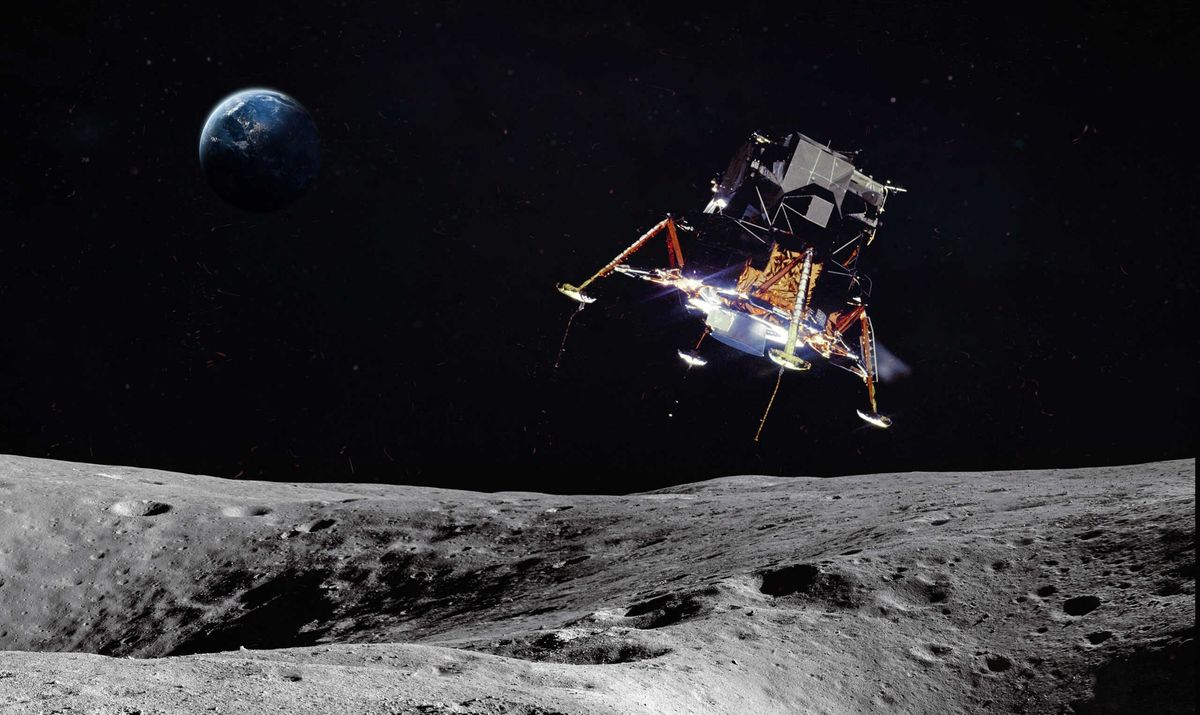
Fast forward to today, and NASA has launch fever to hire commercial space companies to land on the Moon and develop a (hopefully) booming lunar economy. But there's a huge, glaring problem: the mission planners, technologists, and engineers don't seem to realize how badly they need lunar geologists!
Geology is the science of "where"—literally where information has a specific location in space with a latitude and a longitude. For instance, if you’re looking to mine water ice on the Moon, you need to understand the topography to know exactly where the long shadows and permanent shade are hiding it.
Let's talk about the rocks you'll find up there. People are always shocked to learn that the Moon has massive lava flows and extinct (or maybe not-so-extinct?) volcanoes. The lunar highlands are made of a mineral called anorthite (confusingly making up the rock anorthosite), while the lowlands are mostly the volcanic rock basalt—basically the same lava rocks as Hawaii orIceland. Want to mine titanium? You need to know the difference between high-titanium basalt and low-titanium basalt. Want heavy metals? Look for pyroclastic deposits around those old volcanic vents. Oh, and there's a wonderfully-named area called the Procellarum KREEP terrain. (KREEP stands for potassium [chemical symbol K], Rare Earth Elements, and Phosphorus.) It’s rich in the rare earth elements we need for consumer electronics, plus a radioactive element called thorium that we can use for lunar nuclear reactors.
It’s not just about the surface, either. We need to look deep underground for resources, and fortunately, the cosmos does the hard work for us. Impact craters are basically nature's excavator. The ejecta—all that rocky stuff blasted out of the hole—is dug up from deep underground, exposing layers we otherwise couldn't reach. If we want to find phosphate minerals (say, for fertilizer or manufacturing), for example, we just need to track down occurrences of rare minerals like apatite. (I don’t know about you, but I’ve got an appetite for apatite.) Geologists and geophysicists can also deploy geo phones to do "seismic tomography" (which is basically taking an ultrasound underground) or use radar to find out what mineral resources or ice are hiding down there. We can even drill boreholes and drop down cameras, imaging spectrometers, and gamma and neutron spectrometers to pinpoint exactly what elements we want to extract. Throw some thermometers down those boreholes, and you can find hot spots for lunar geothermal power production.
And let's talk about building NASA’s shiny new Moon Base. Civil engineering on Earth requires geologists to understand slope, rock, and soil stability, and how much the soil compacts (settles)over time. The Moon is absolutely no different. As we build increasingly larger structures on there, we need geologists to inform the civil engineers. Imagine dropping a multi-million-dollar habitat right on an active fault line. The ground moves from a moonquake, and it splits the building apart!
So why is there such a blind spot in the industry to the need for geologists? Do you remember your 10 th grade geology class? No? Geology is basically ignored in K-12 education, and most people only accidentally stumble into it in college, meaning geology programs usually collect transfer majors. Solving a problem begins with education, so we desperately need to include proper geology—not just basic earth science—in high school learning guidelines, which also means training teachers to teach the subject matter.
But until the schools catch up, we’re here to help. There are plenty of lunar and planetary geologists ready to be hired by the private sector to help inform where these new lunar missions go. In fact, my own employer, the Planetary Science Institute, has 130 PhD planetary scientists who can be commercially contracted to tell you the most lucrative activities to do and the absolute best places to land.
Finally, having a little bit of geological literacy goes a long way toward protecting the Moon, too. Even as we develop the Moon economically, we need conservation geologists to identify pristine areas that should be protected from development and saved for basic scientific study. And looking further down the road to when lunar tourism is a booming business, geologists will be the ones identifying the most picturesque, safe, and non-disruptive hiking trails as nature lovers lope about in 1/6 th gravity. We geologists will even act as orbital tour guides to explain the mind-blowing features to tourists gazing out the windows of their orbiting spacecraft.
So, commercial mission planners: hire a lunar geologist. We promise we're fun, even if we just want to stare at dusty rocks all day. Because, that’s where the money is.
Kirby Runyon, PhD, is a research scientist in planetary geology at the Planetary ScienceInstitute (psi.edu) where he researches the Moon’s largest impact basins and the geology of impacts. As the CEO of Planetary Experience Consulting LLC (planex.space), he also guides tours of planetary and spaceflight analog sites in New Mexico and is the author of the upcoming book, “How to Vacation in Space Without Leaving Earth: Real Places you can Visit toExperience Outer Space on Earth.” He lives in Washington, DC.







 Why Top Talent Is No Longer Betting Everything on One Employer