SANTA BARBARA, Calif., July 7, 2026 — City Labs became the first company to launch commercial nuclear hardware into space on Tuesday, deploying the world’s first commercial nuclear-powered satellite in a milestone that could expand the market for long-duration power systems needed to help the U.S. establish a permanent base on the Moon -- and beyond.
The Florida-based company’s compact nuclear battery -- dubbed NanoTritium -- took off aboard SpaceX’s Transporter-17 rideshare mission, which launched from Vandenberg Space Force Base. The nuclear battery harnesses tritium to generate steady electricity for years without sunlight, charging or replacement.
For investors tracking the next phase of the space economy, the mission addresses a longstanding infrastructure challenge: how to power systems that must operate continuously in darkness, inside sealed spacecraft, on the lunar surface, or far from the Sun.
The satellite uses conventional solar arrays for its primary spacecraft systems. The NanoTritium device flies as a dedicated payload power source, giving City Labs its first on-orbit demonstration and establishing flight heritage for technology the company says is ready for broader commercial deployment.
“This is a historic step for commercial nuclear power in space,” said Peter Cabauy, chief executive of City Labs, in comments to mtf.news. “If we want to go back to the Moon and create a sustainable lunar base, then we need commercial companies to step up and make this a scalable effort. The regulatory framework that was created enables companies like City Labs to carry nuclear into space.”
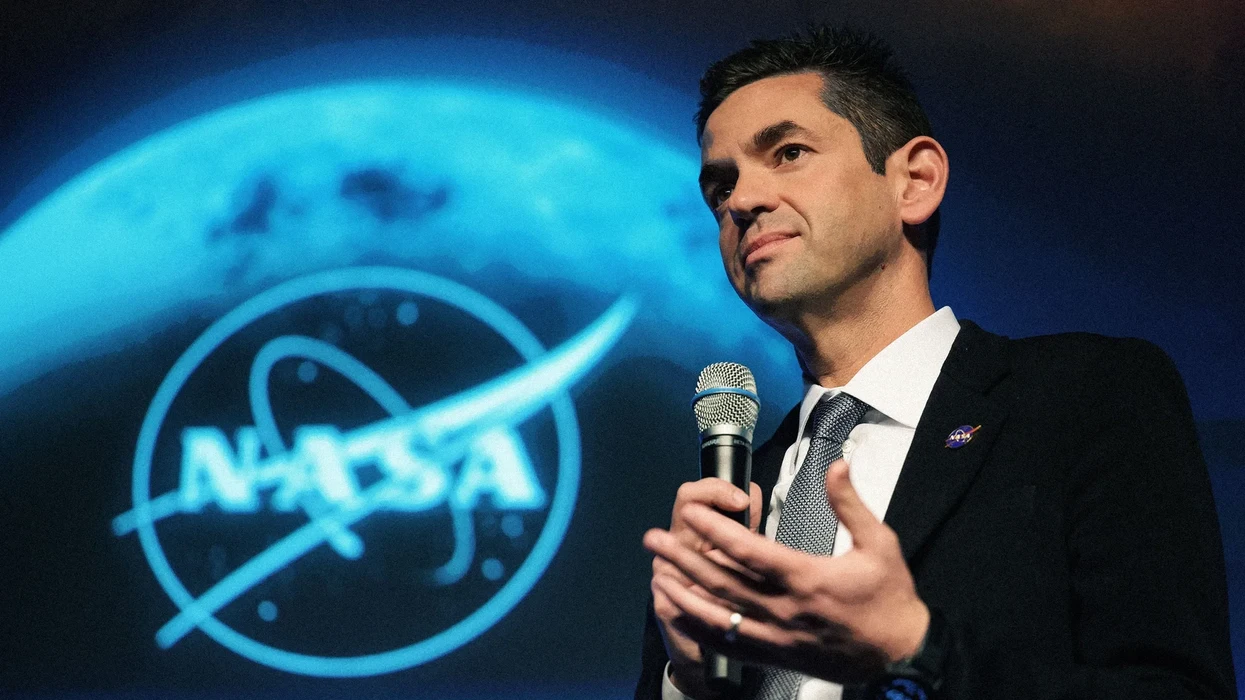
The mission is also a giant market signal that commercial space nuclear can become part of the infrastructure stack required for lunar permanence. NASA Administrator Jared Isaacman has made that goal central to the agency’s Moon Base vision, calling for an enduring U.S. presence on the Moon.
“Administrator Isaacman’s Moon Base vision depends on one thing above all: permanence," said Potomac Database Systems CEO Jacob Matthews, who attended the City Labs launch. "City Labs just showed that commercial nuclear batteries can deliver the persistent power needed to make that vision real.”
For decades, nuclear power in space has been associated primarily with government missions, especially NASA deep-space probes that required radioisotope systems beyond the practical reach of solar energy. City Labs’ launch points to a smaller, more distributed market. Its tritium-based battery targets lower-power applications such as sensors, memory retention, telemetry, backup electronics and autonomous systems that must keep working for years.
That distinction could matter commercially. As spacecraft become more distributed, autonomous and mission-specific, demand for small, persistent power sources is expected to grow across lunar surface systems, defense payloads, deep-space instruments and industrial monitoring applications. The City Labs mission gives City Labs a critical credential in that market: flight-proven hardware.
The Lunar Power Gap
The launch comes as NASA, the Pentagon and private companies accelerate plans for lunar and cislunar infrastructure. Power remains one of the hardest constraints.
Solar arrays work well in many orbital environments, but they are less useful in permanently shadowed lunar craters—where water ice may be preserved—and during the Moon’s roughly two-week night. Batteries can bridge short outages, but they add mass, degrade over time and are not ideal for small systems expected to operate for years without maintenance.
That creates an opening for nuclear micropower. City Labs’ system uses tritium, a radioactive form of hydrogen, to generate a small but steady electrical output. As tritium decays, it releases particles that interact with a semiconductor material inside the battery, producing electricity.
The result is a compact power source that can operate without sunlight. The company says the technology can support low-power electronics for 20 years or more, depending on mission design.
The mission is also important because of how it was approved. City Labs said BOHR is the first commercial nuclear payload to complete the Federal Aviation Administration’s launch approval process for nuclear materials on U.S. launches under National Security Presidential Memorandum-20, the federal framework governing space nuclear systems.
"City Labs' successful mission is a major regulatory milestone for the space sector," said Alex Gilbert, principal of Rocinante Fieldworks, and the nation's leading space nuclear regulatory expert. "It is the first time that the FAA has approved a nuclear system to launch to orbit, establishing precedent to build on. For years, the space industry has wanted new nuclear technologies but has always asked: is it even possible to get through all the regulations? City Labs just resoundingly said, 'Yes.'"
The company prepared its safety analysis with technical input and independent review from Sandia National Laboratories. The FAA issued its approval in September 2025.
For the commercial space industry, that regulatory precedent may prove as meaningful as the technical demonstration. Nuclear systems have long been viewed as powerful but difficult to approve, integrate and commercialize. This successful launch under the FAA process paves the way for future private-sector nuclear payloads.
Defense and Space Demand
City Labs developed the Betavoltaic Orbital High-Reliability (BOHR) satellite with a mix of private investment and government support, including programs connected to the Department of War and the Air Force Research Laboratory.
That reflects a broader market signal. National security space operators are seeking resilient systems that can function in contested, remote or degraded environments. Small nuclear batteries could be useful for payloads that must remain dormant, hidden, sealed or continuously available without relying on solar exposure.
Commercial demand could also emerge from lunar surface networks, deep-space probes, autonomous science stations, navigation beacons, communications nodes and industrial monitoring systems.
The addressable market remains early-stage. But investors have increasingly focused on the picks-and-shovels layer of space infrastructure: power, data, logistics, communications and autonomy. City Labs is positioning its tritium battery as one of those enabling technologies.
Small battery, big infrastructure
City Labs’ approach differs from the larger radioisotope systems historically used by NASA. Those systems can generate more power and have enabled missions to the outer planets and beyond. City Labs’ tritium-based system produces lower power levels but is designed to be compact, modular and suitable for smaller commercial spacecraft.
City Labs, based in Florida, develops tritium-based micropower systems for medical, industrial and space applications. With BOHR now in orbit, the company has moved its space power technology from laboratory promise to commercial flight heritage.
For the broader space economy, the launch marks a subtle but potentially consequential shift: nuclear power is no longer only a government tool for flagship missions. It is beginning to enter the commercial supply chain. The first step was not a reactor or a large spacecraft. It was a tiny nuclear battery designed to keep working when everything else goes dark.



 Elon Musk Fox Business Network